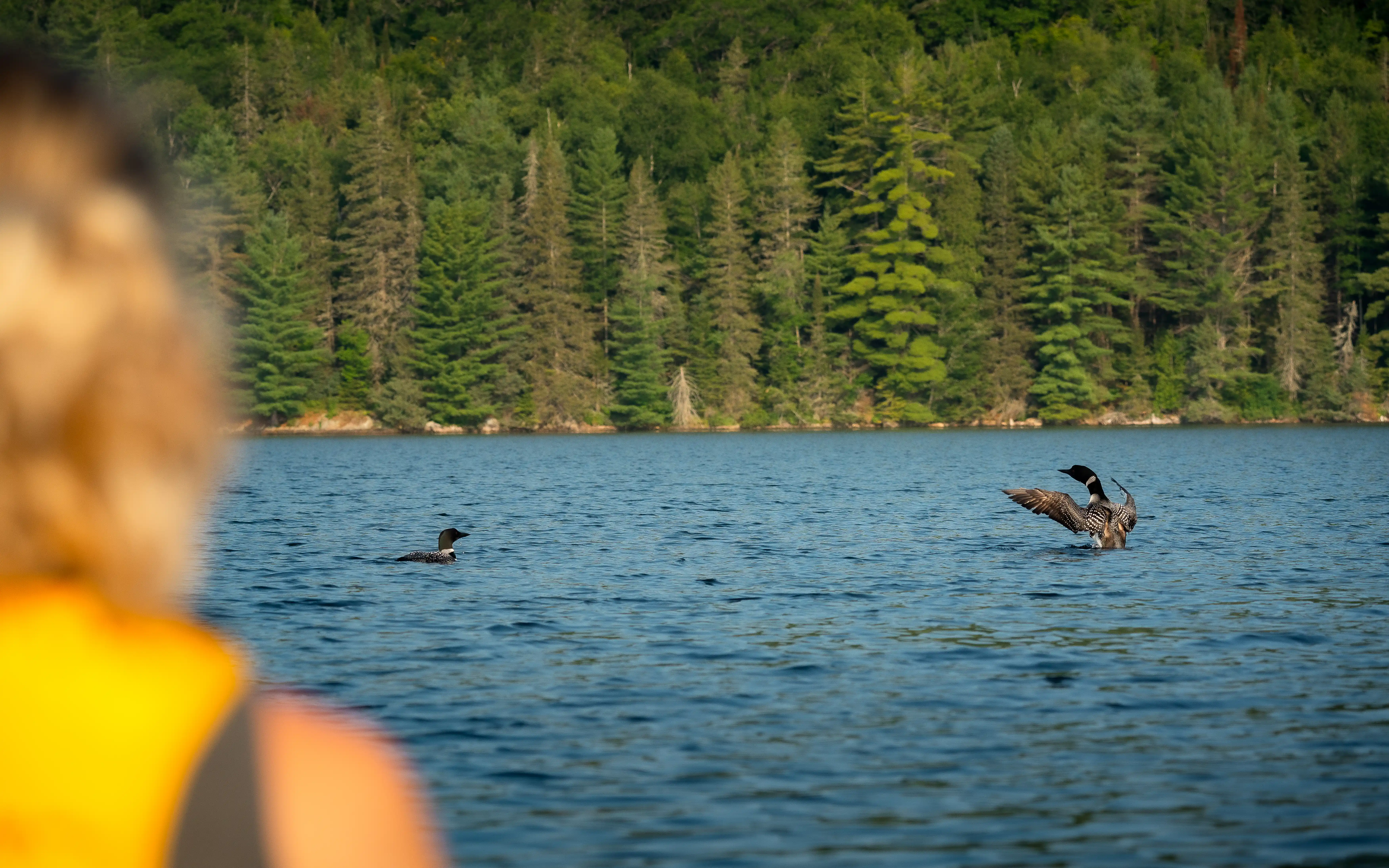
The common loon has been around for 65 million years. It is one of the oldest bird lineages on Earth, and it looks the part — a creature whose design has not changed because it did not need to.
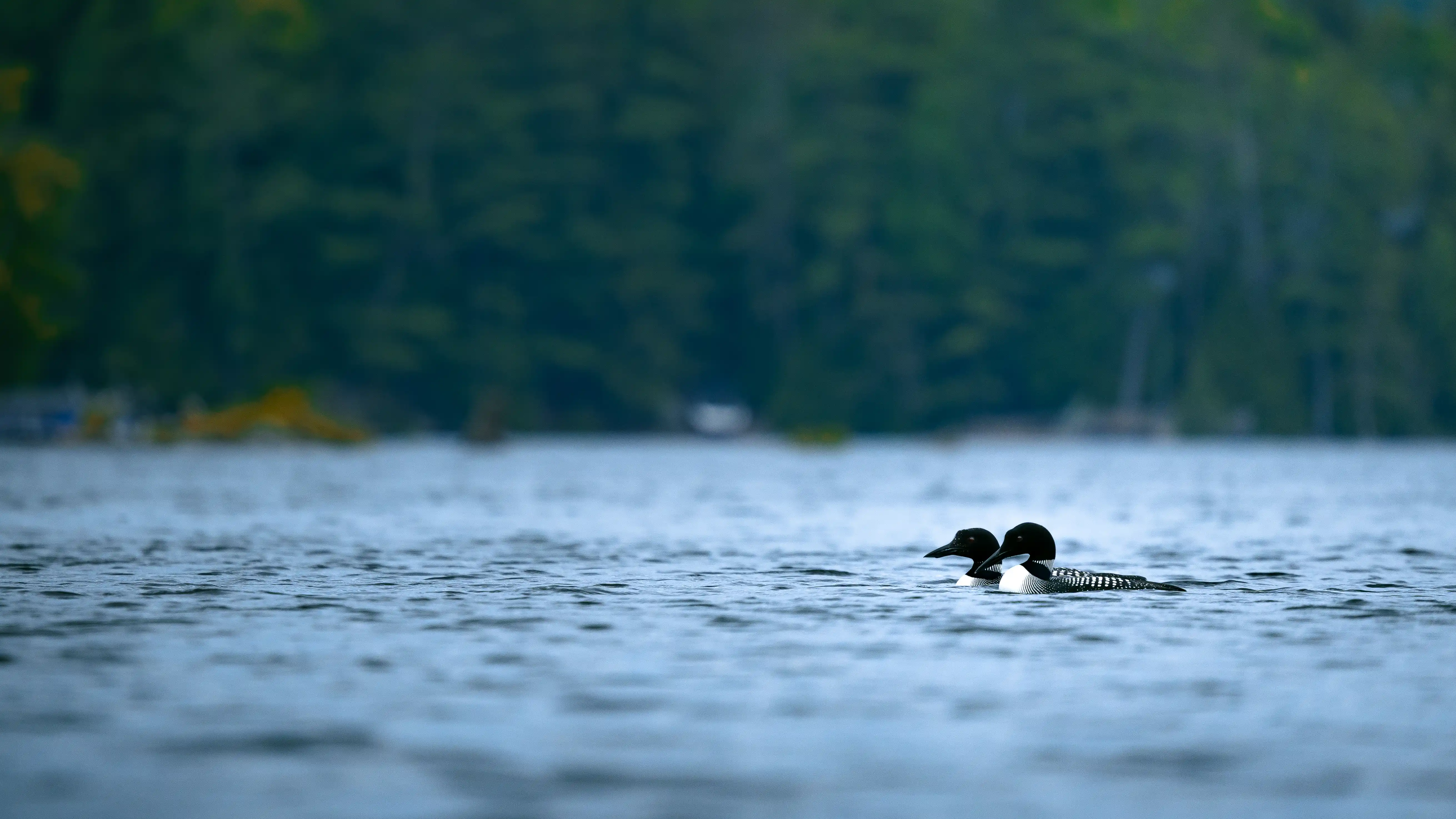
Modern loons have been found in the fossil record as early as the Eocene — about 35 million years ago. In prehistoric times, loons lived much further south — their remains have been found in California, Florida, and northern Italy. Modern climate patterns pushed them north, into the cold clear lakes of the boreal and sub-boreal zones that now constitute their primary breeding range.
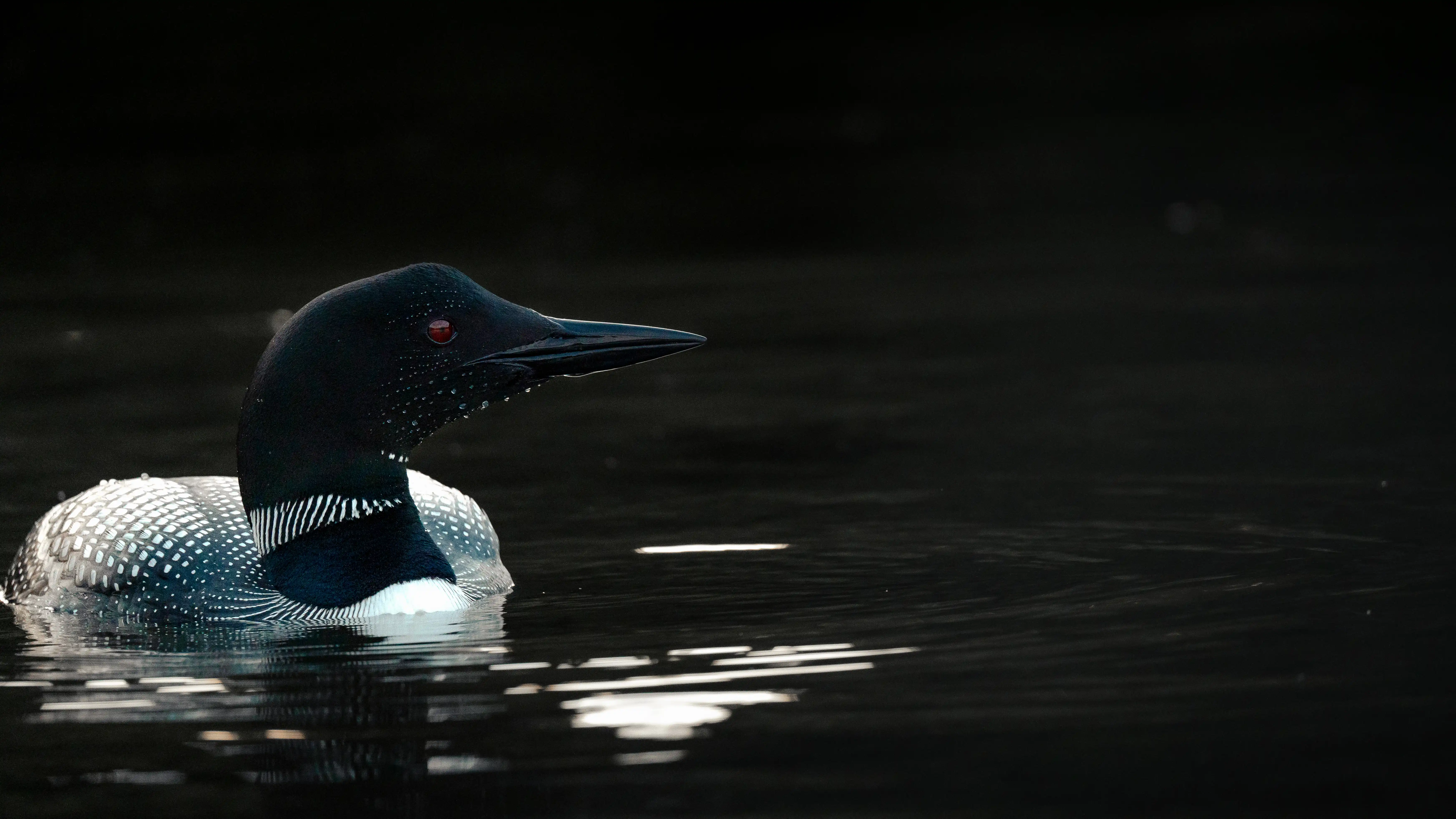
Anatomy for Water
The loon's body is one of the most specialised for aquatic life among North American birds. Their legs are positioned far toward the back of the body — ideal for propulsion underwater, but almost useless on land. A loon on land moves in an awkward belly-dragging shuffle. In water it is something else entirely. Loons can dive to depths exceeding 70 metres and remain submerged for up to five minutes. Their bones are denser and less hollow than those of most birds — reducing buoyancy and making it easier to stay submerged while pursuing fish. They are pursuit predators, chasing fish at speeds that can exceed 20 kilometres per hour through the water column.
The Calls
Loons have four distinct vocalizations. The tremolo is used as an alarm signal when startled or when a predator approaches. The yodel is produced exclusively by males — it announces territorial ownership and is individual to each bird, changing slightly with age. The wail is the haunting, plaintive call most people associate with loons — used to maintain contact between mates or between parents and chicks across the water. The hoot is a quiet, close-range call between family members.
Life History
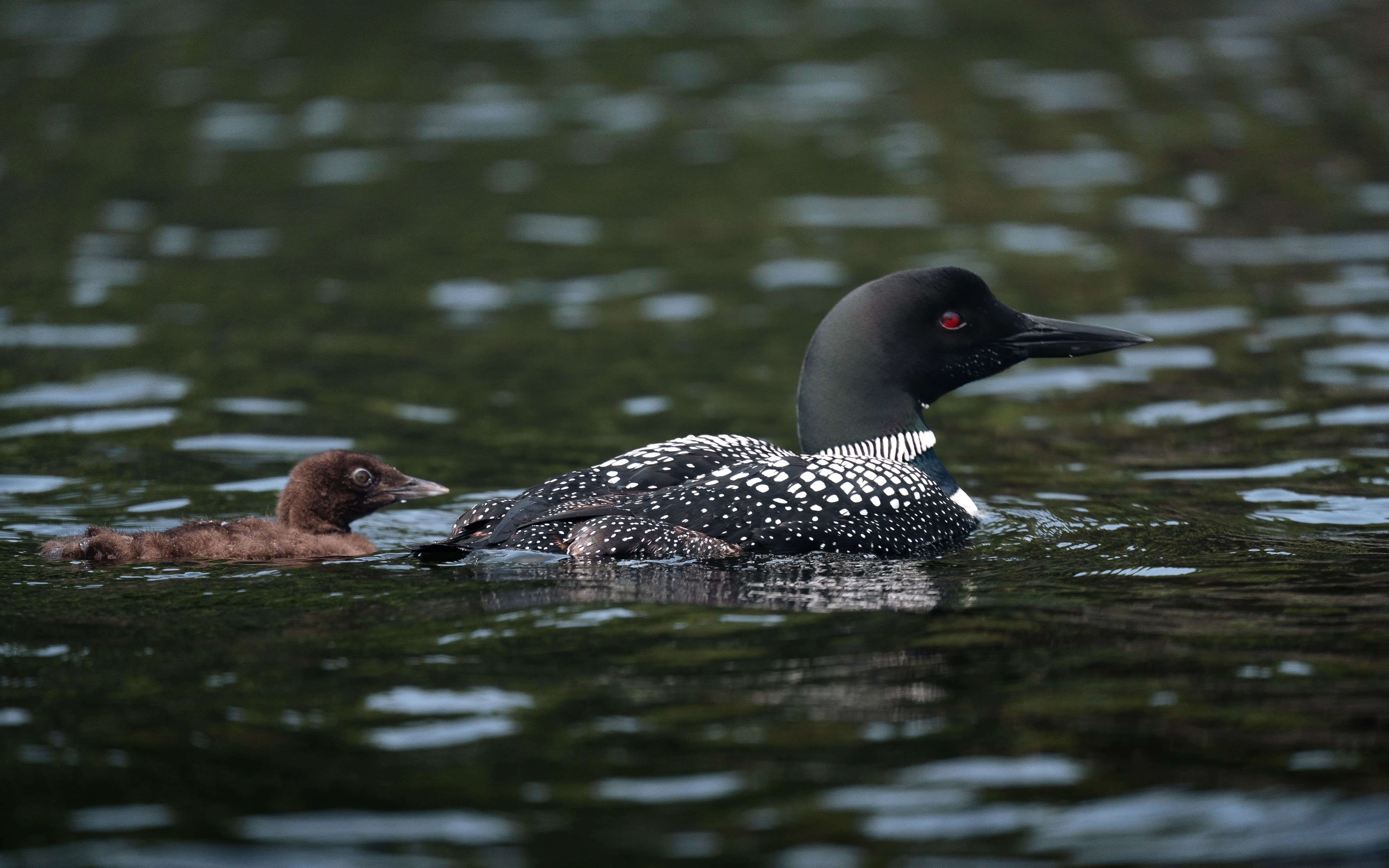
Loons do not begin breeding until age six. A pair forms a long-term bond, typically returning to the same lake territory year after year. Nests are built at the water's edge, often just centimetres above the waterline — vulnerable to wave disturbance and fluctuating water levels. One to two eggs are laid in late May or early June, and both parents incubate them for approximately 29 days. Chicks enter the water within hours of hatching. Young loons ride on their parents' backs in the early weeks, tucked beneath the wing feathers for warmth and protection from predators. Loons migrate south in autumn to coastal Atlantic waters, where they spend the winter in drab grey non-breeding plumage.
The Photography
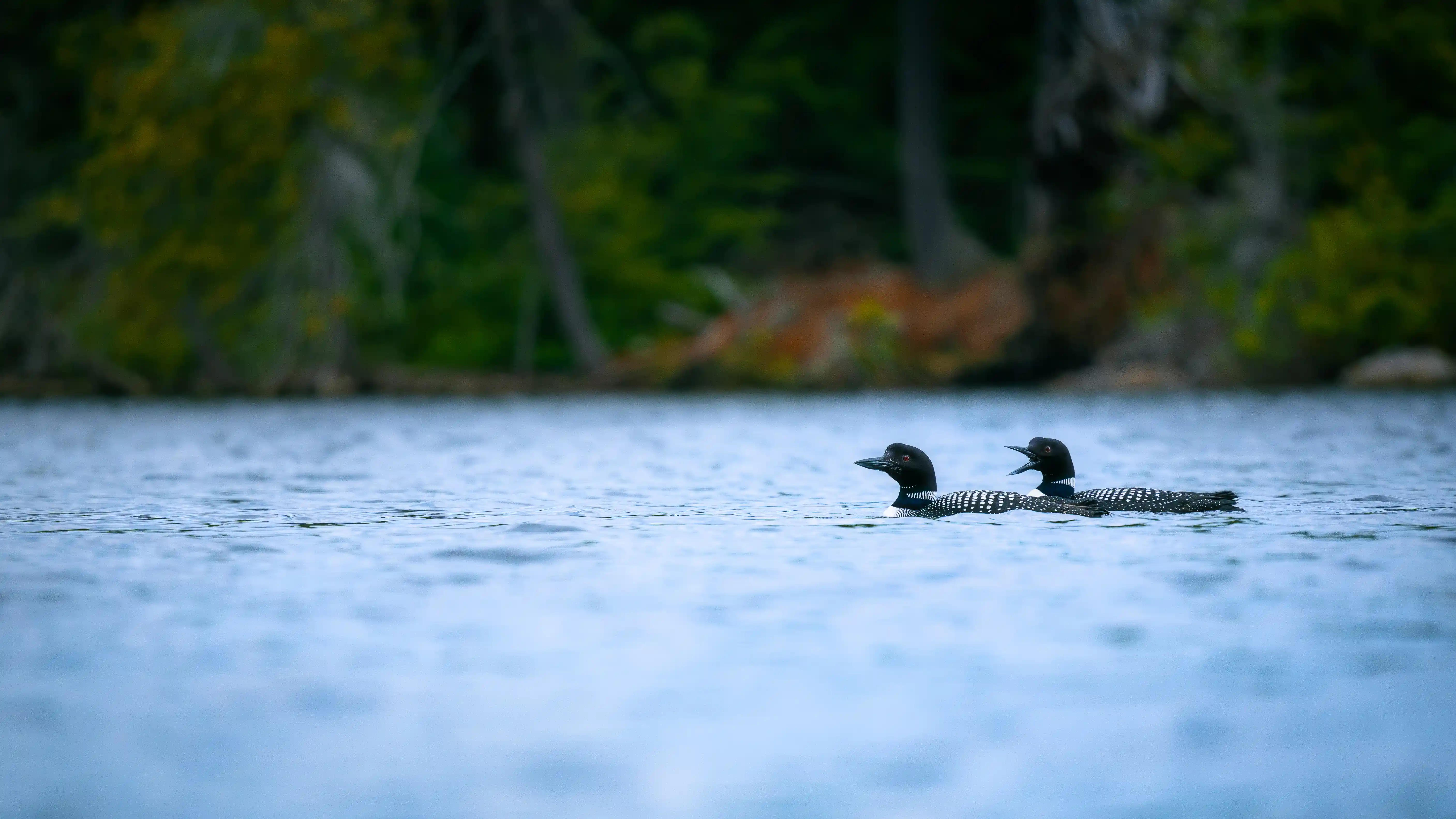
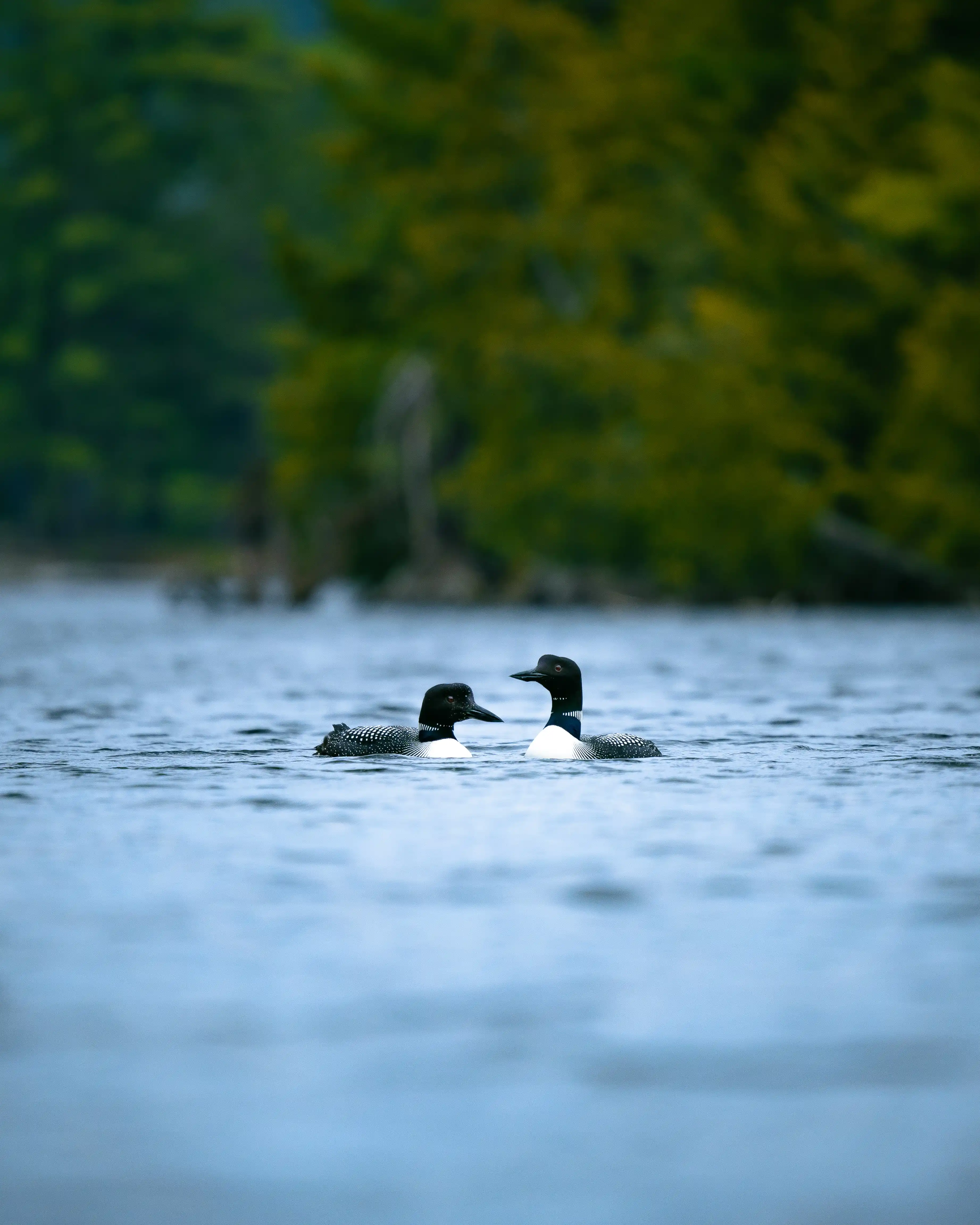
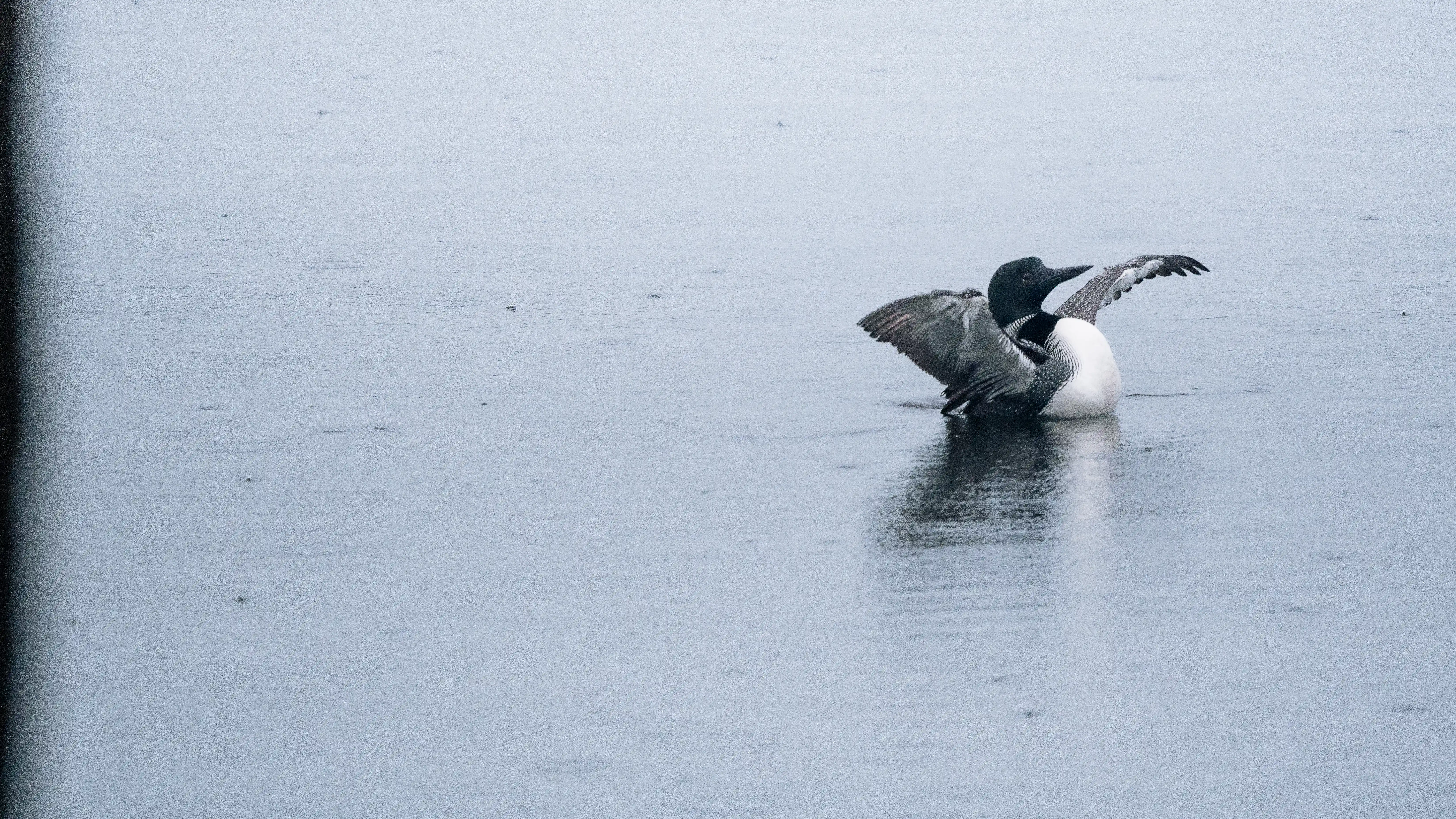
Photographing loons requires patience and a long lens. These images were made from a kayak on Kennisis Lake over several mornings and evenings, using the low angle of the water to produce the compressed, intimate perspective the photographs required.