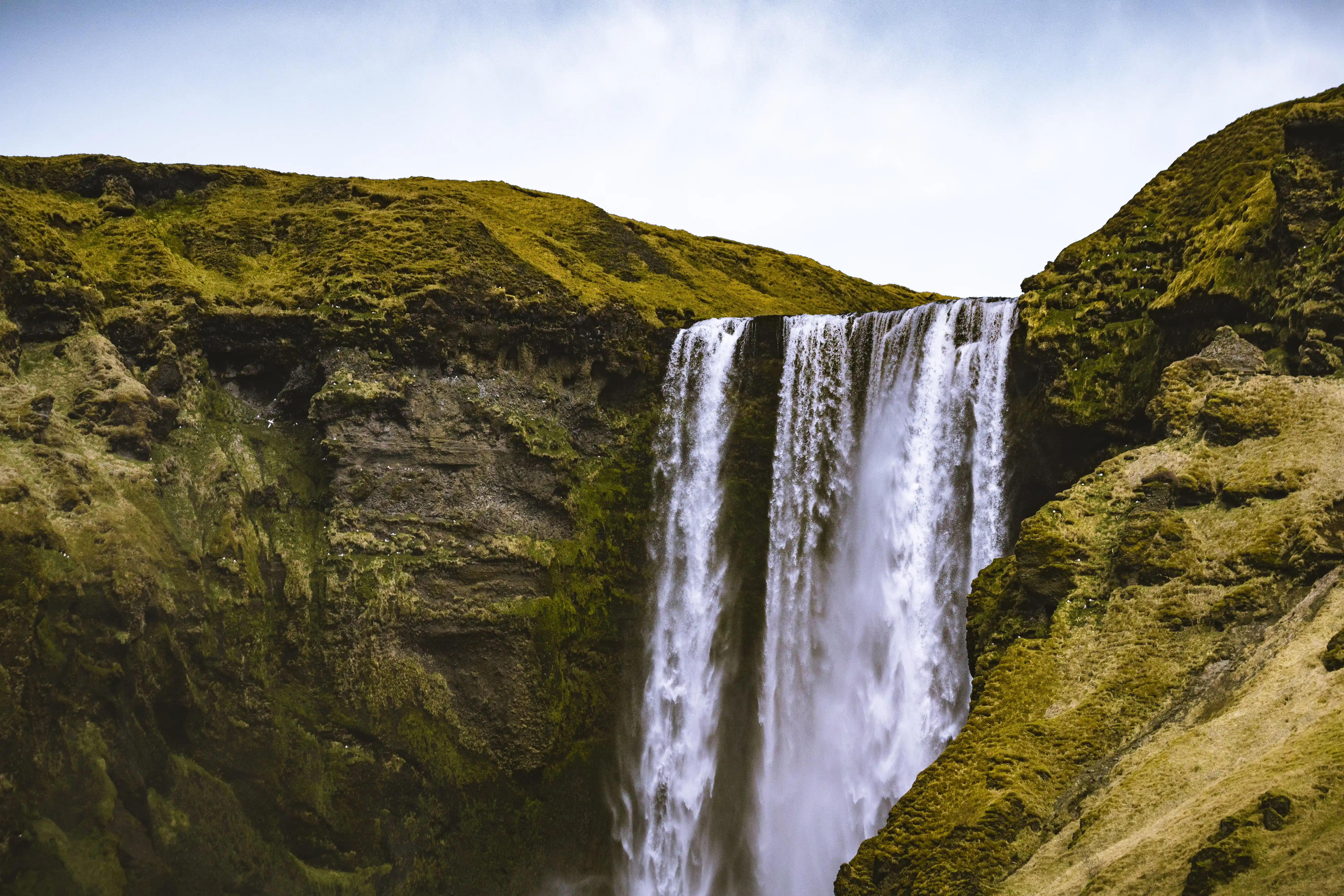
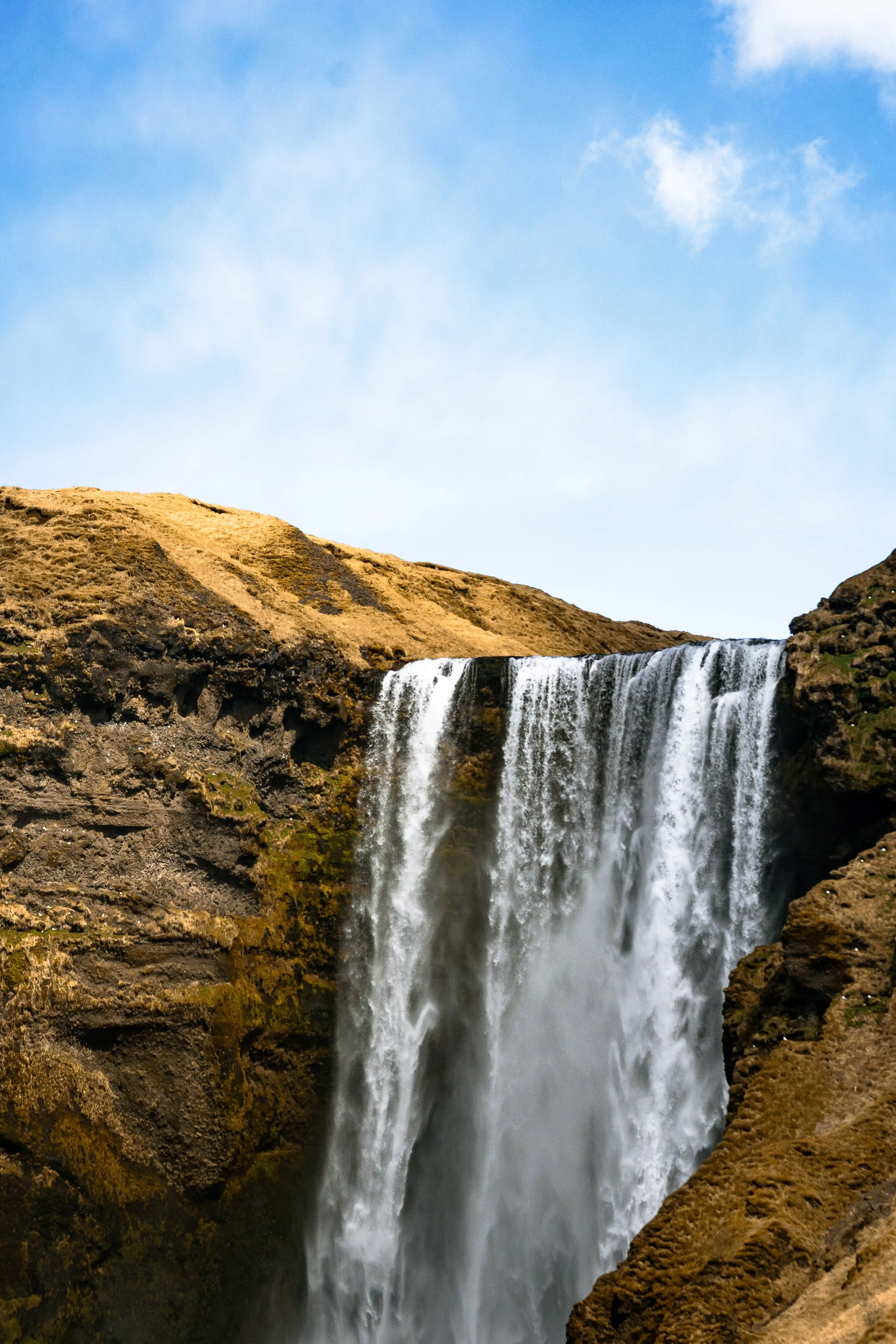
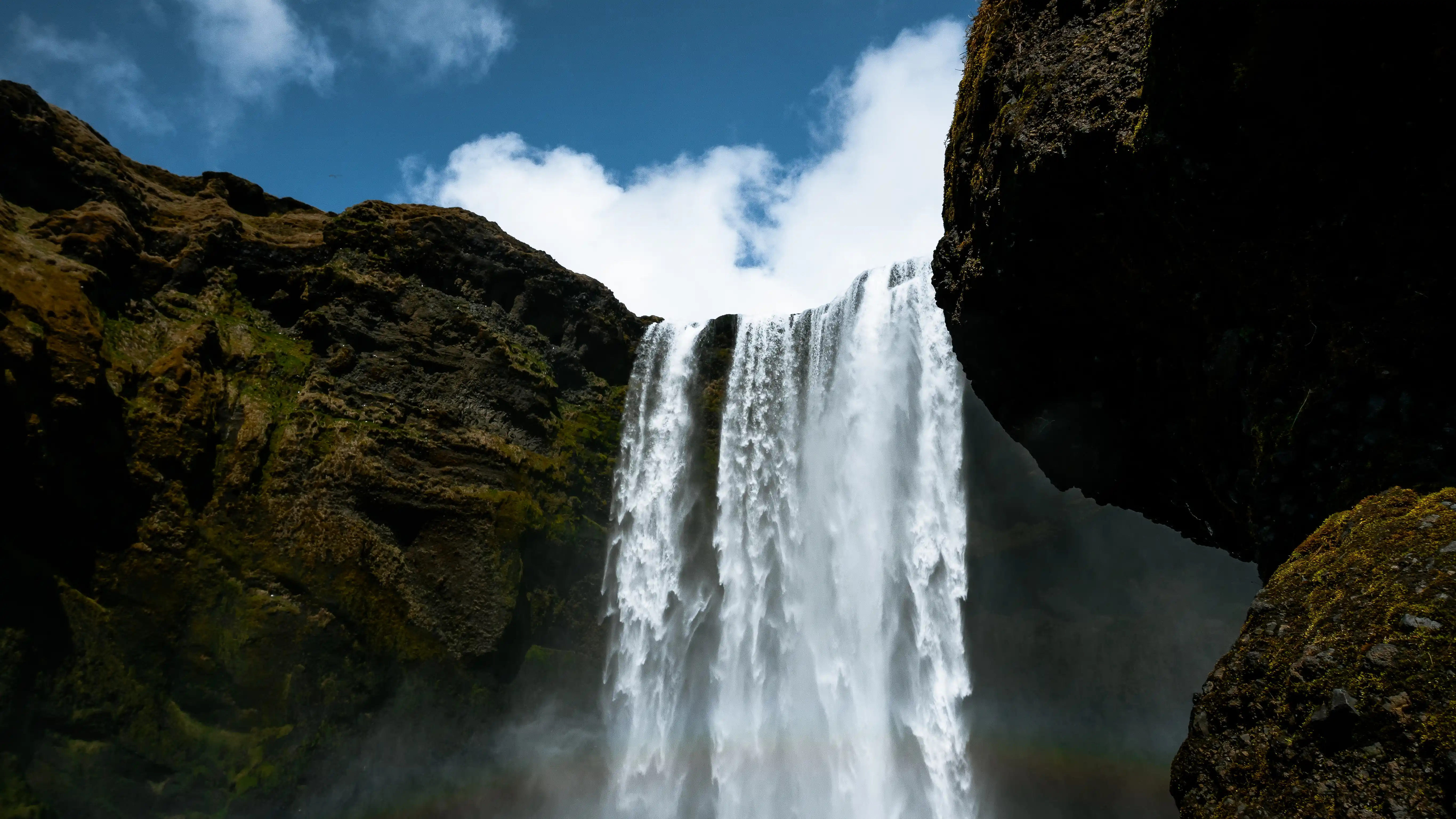
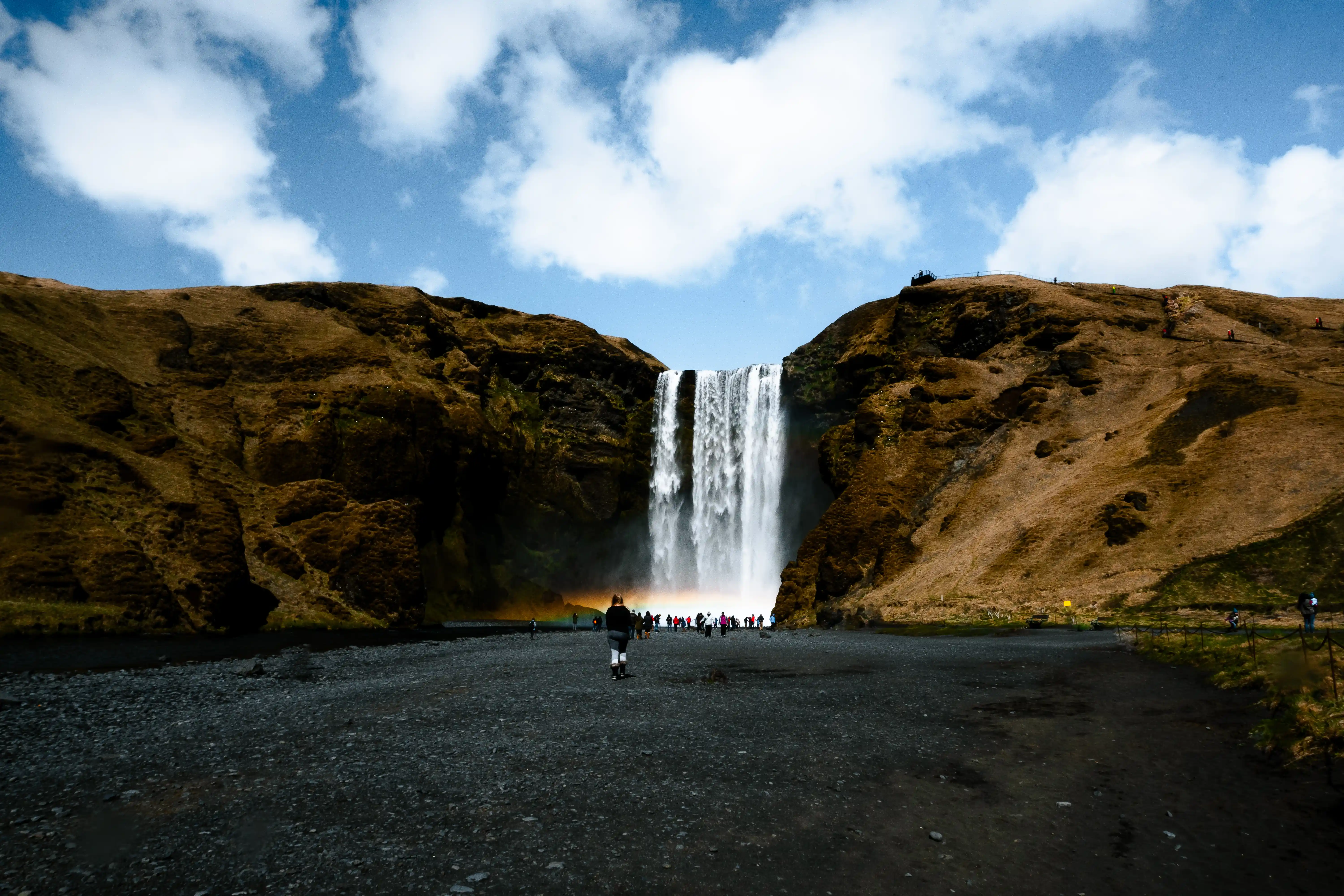
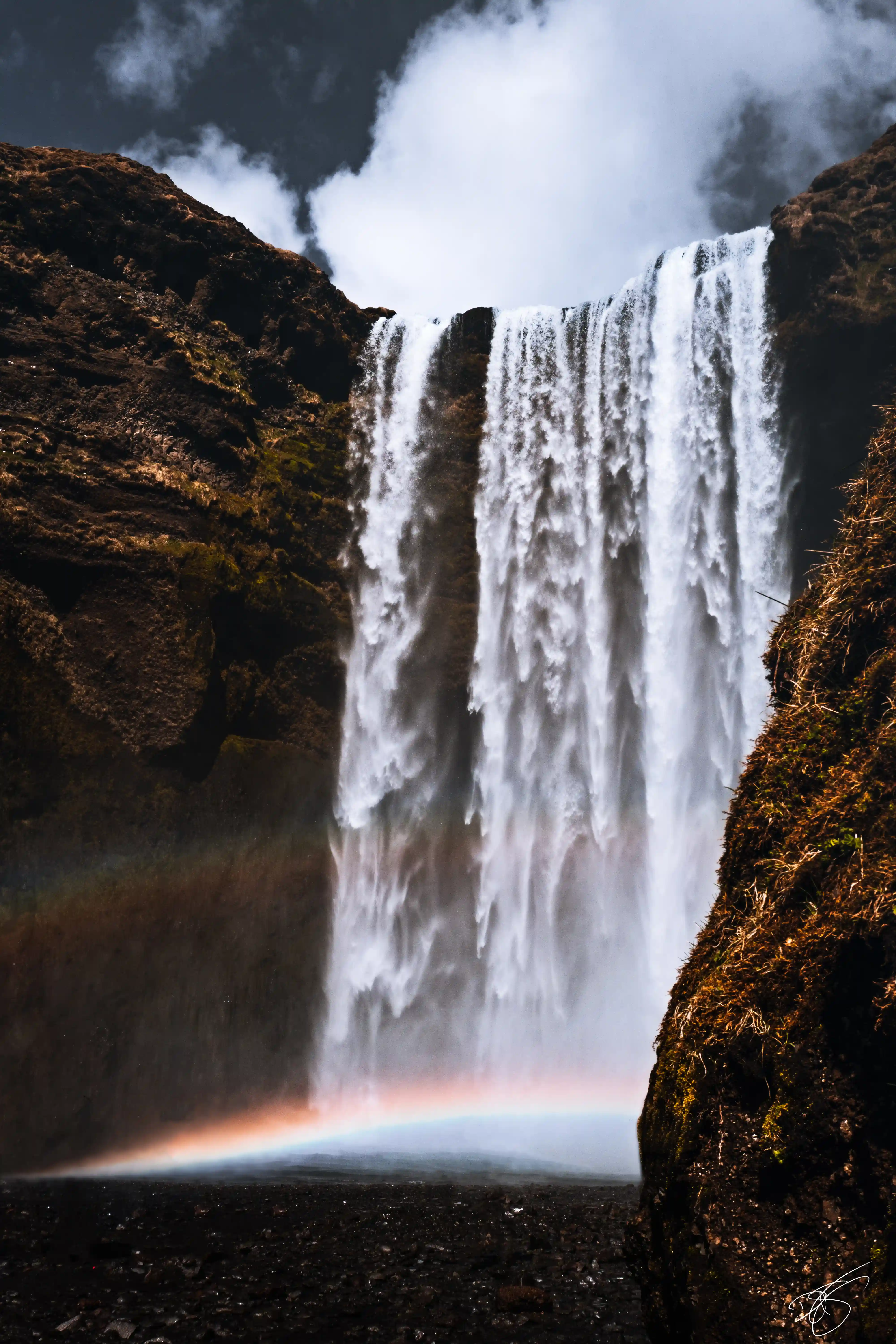
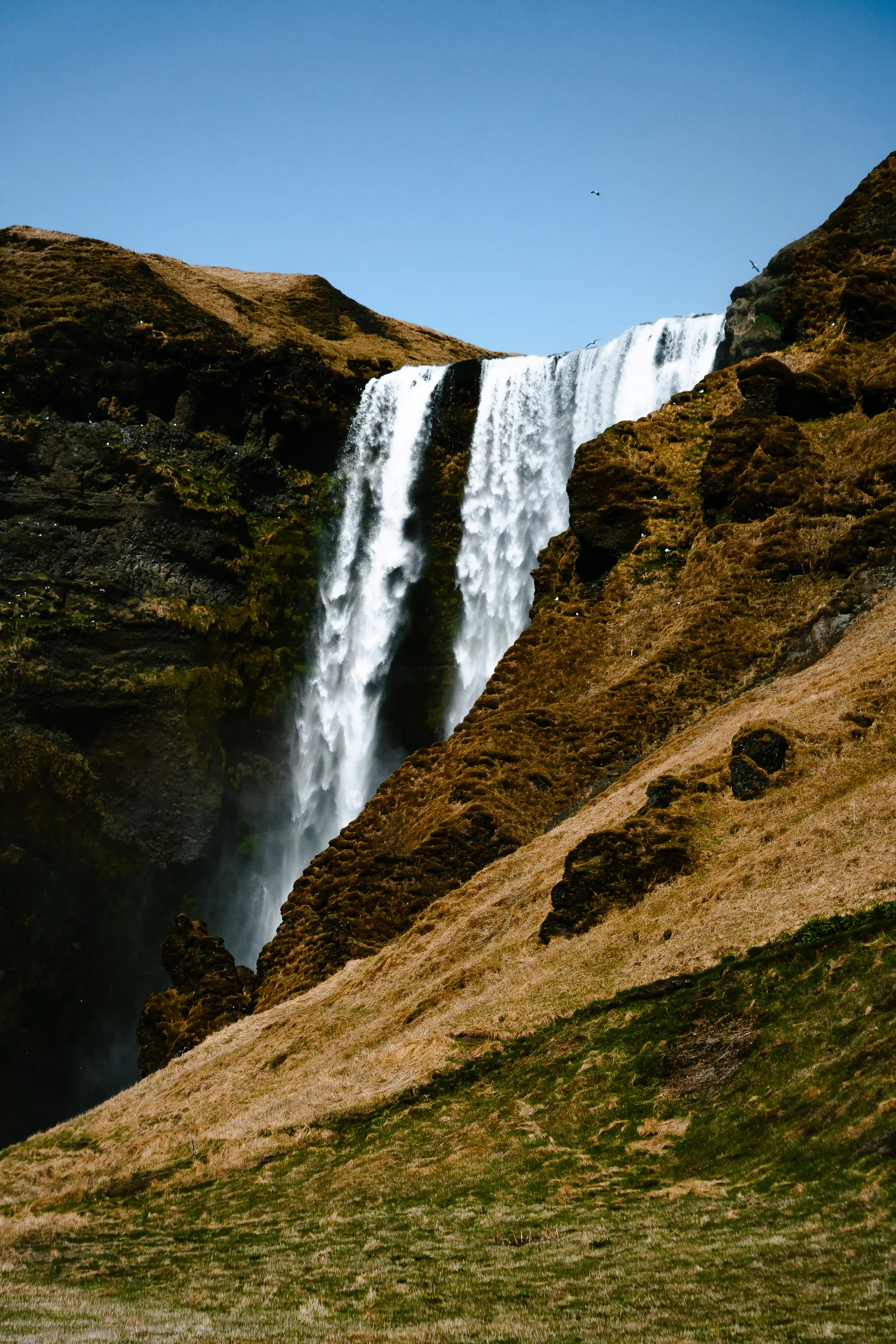
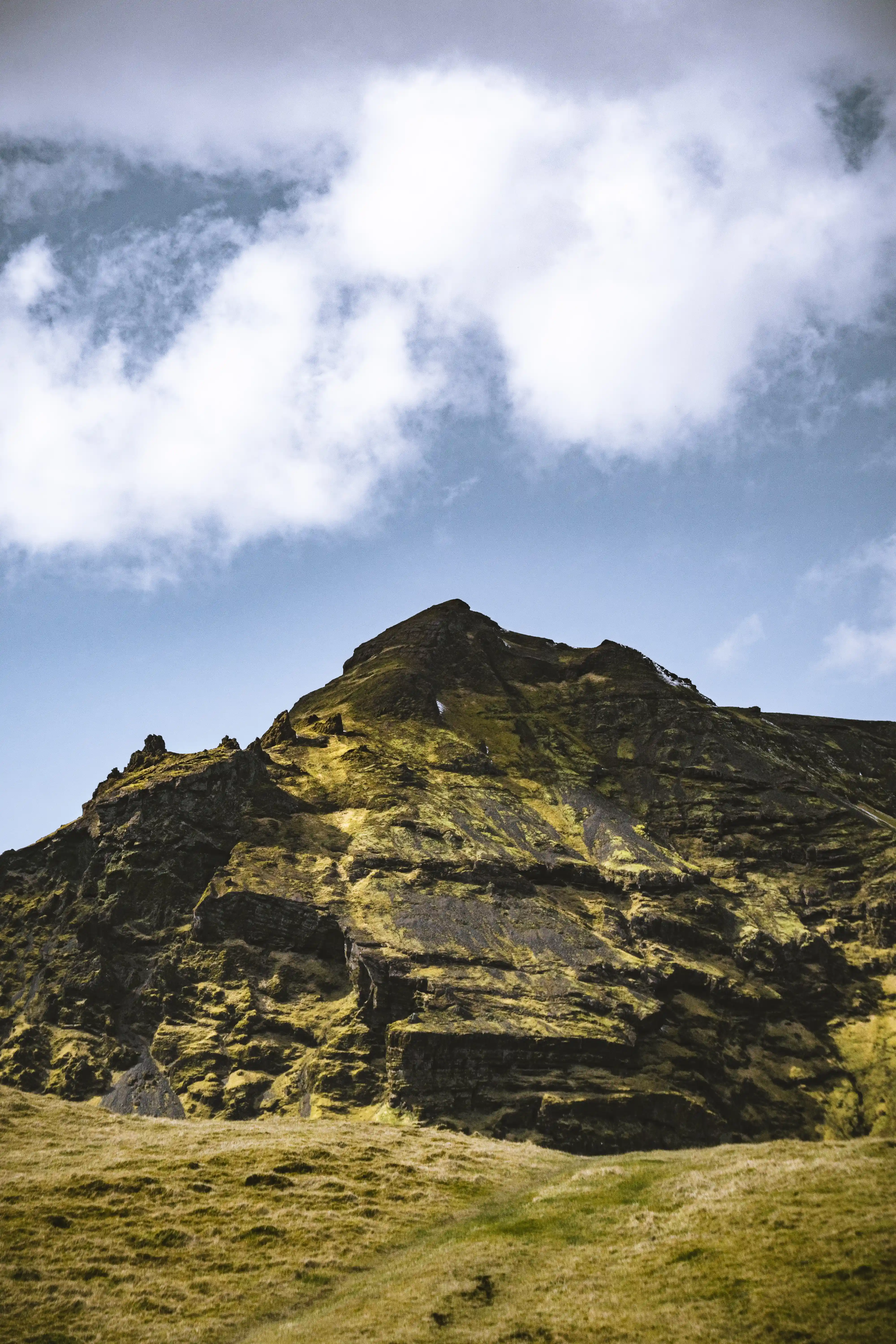
Skógafoss drops 60 metres in a single unbroken curtain. It is wide — 25 metres across — and the volume of water it carries from the Eyjafjallajökull glacier turns the air around it permanently wet.
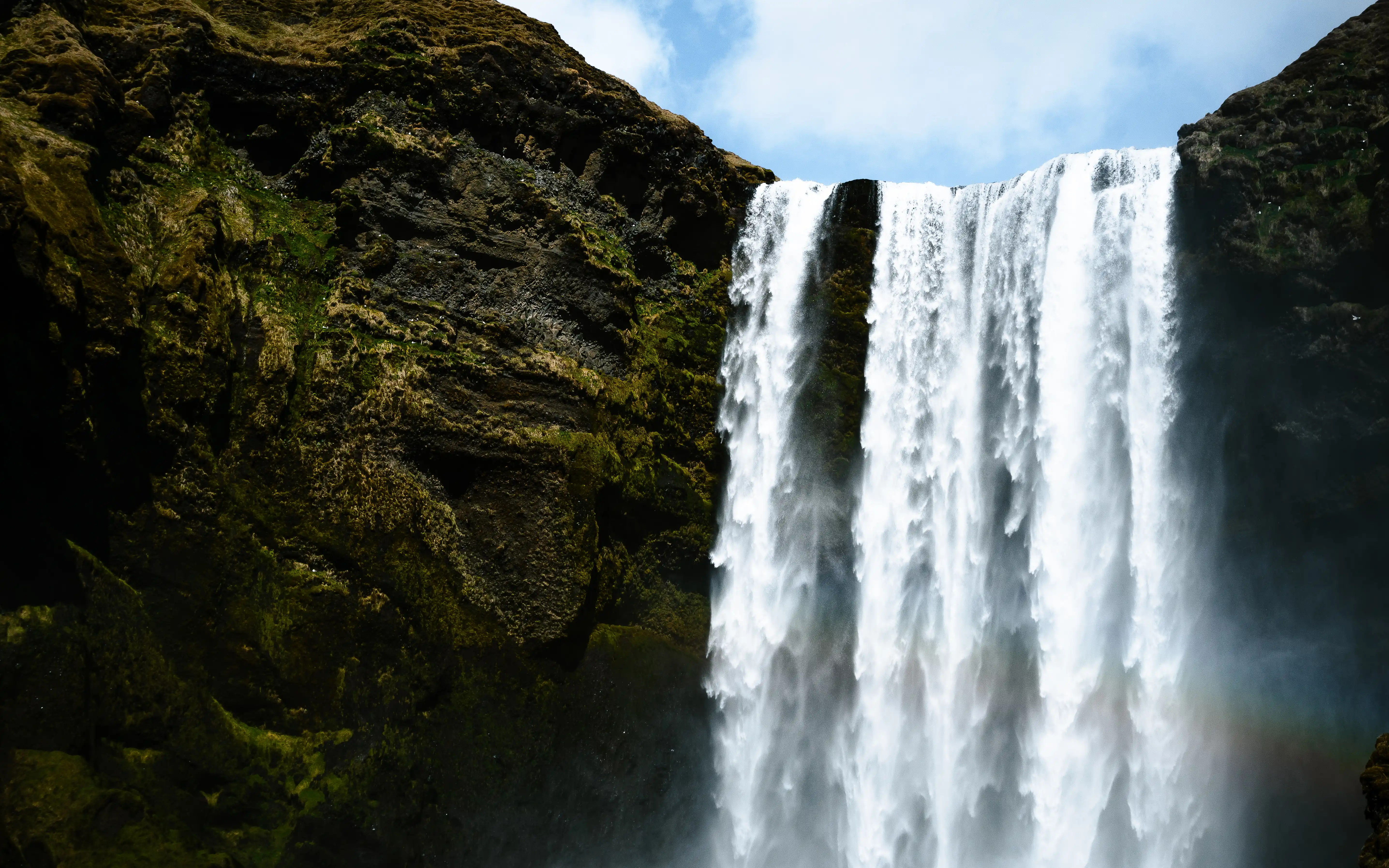
Standing within 20 metres of Skógafoss soaks you. The mist that rises from the impact point carries far into the surrounding meadow, and on still days it hangs in a sustained cloud that catches rainbows when the sun is at the right angle. Double rainbows form in the spray regularly — the water volume and geometry of the site make rainbow conditions reliable, not occasional.
Geology of the Waterfall
The Skógá River originates from the Eyjafjallajökull volcano-glacier system, which erupted in 2010 and produced an ash plume that disrupted European air travel for six days. The glacier feeds the river with steady meltwater throughout summer. The cliff face over which the waterfall falls is the remnant of an ancient sea cliff — the shoreline of Iceland as it existed approximately 10,000 years ago, before centuries of lava flows and glacial outwash built the coastal lowland that now extends seaward. The flat coastal plain below Skógafoss is primarily composed of black volcanic sand deposited by glacial floods over thousands of years.
The Viking Legend
According to Icelandic saga tradition, the first Viking settler in the Skógar area — Þrasi Þórólfsson — buried a chest of treasure in a cave behind the waterfall. Generations later, locals discovered the chest, but when they grabbed the ring on its side, the chest dissolved back into the rock. The ring was given to the local church. An old iron ring in the Skógar Folk Museum is claimed to be this artefact, though historians treat the provenance with appropriate skepticism.
The Landscape Boundary
Skógafoss stands at the boundary between two contrasting landscapes. To the west, the valley of Þórsmörk is green, sheltered, and unusually verdant for Iceland. To the east and south, the land opens into broad black sand plains — outwash plains scoured clean by catastrophic glacial floods and now used primarily by the wind.
The Photography
There is a staircase beside Skógafoss that climbs the cliff to a viewpoint at the top of the fall. From here the perspective reverses — instead of looking up at the falling water, you look down the river toward the sea, with the black sand coast visible in the distance. The most dramatic photographs come from the front and slightly to the side, in the morning when the sun is positioned east of the fall and the mist catches direct light. These images were made in a single visit across varying light conditions.