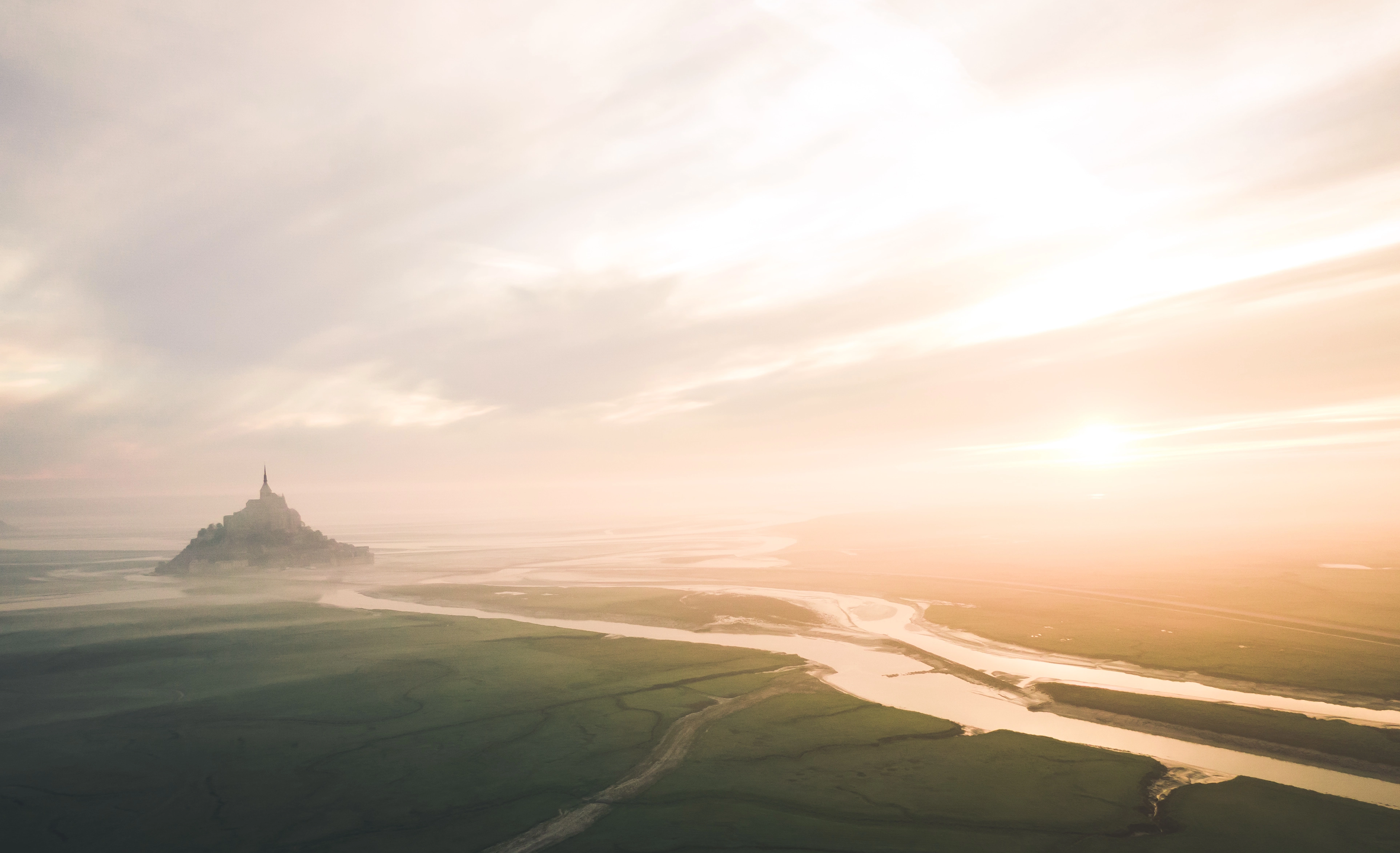
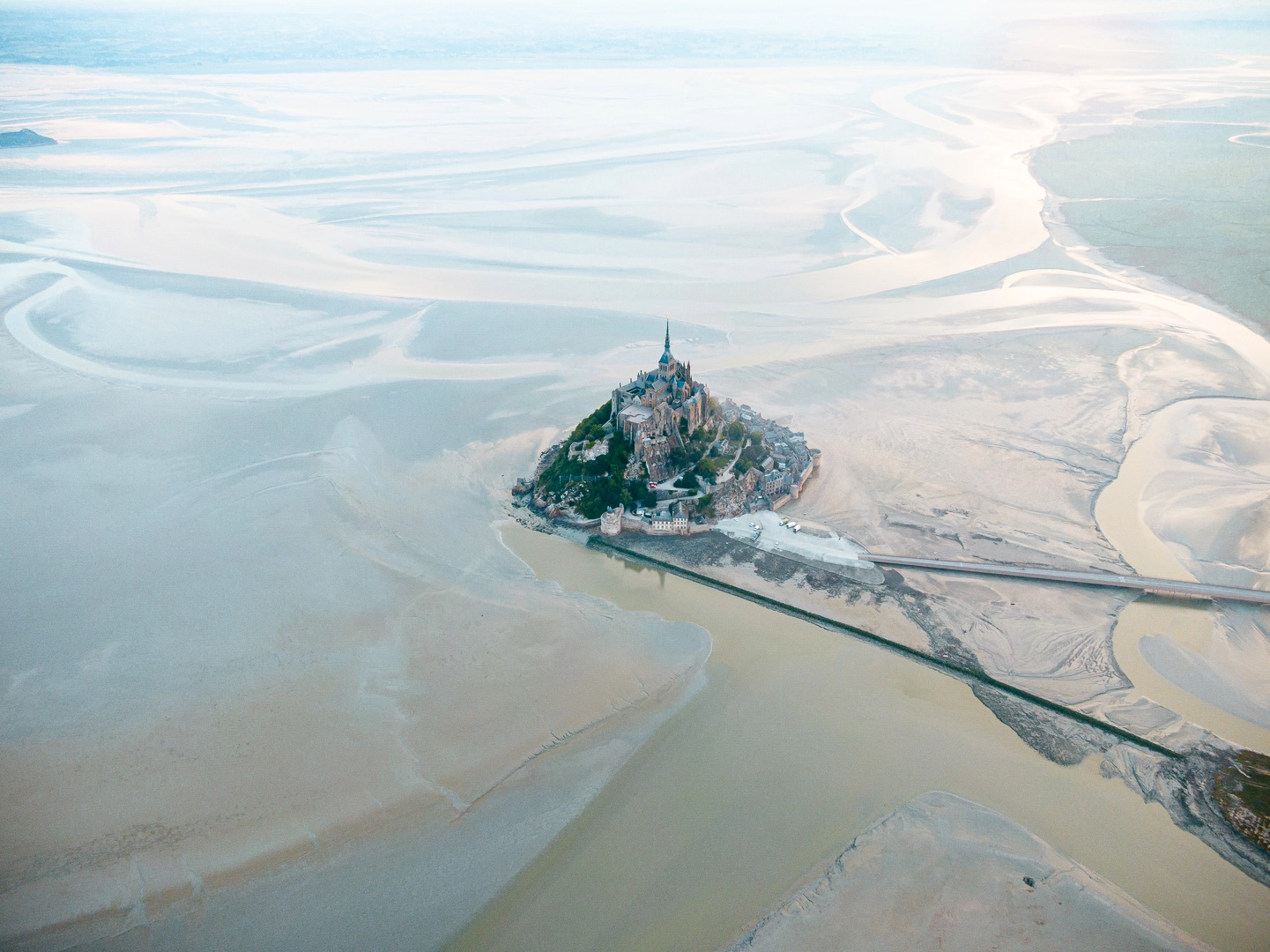
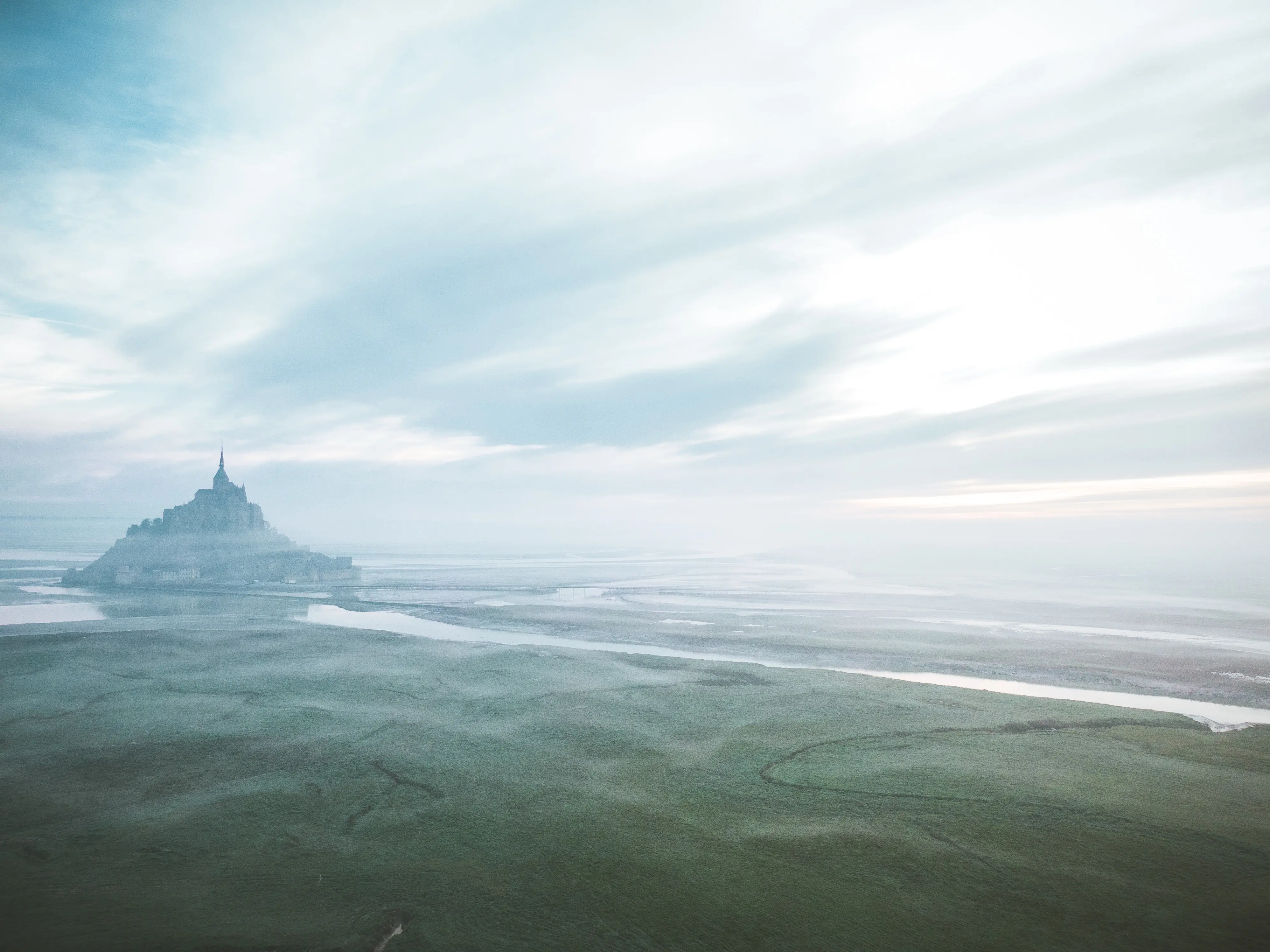
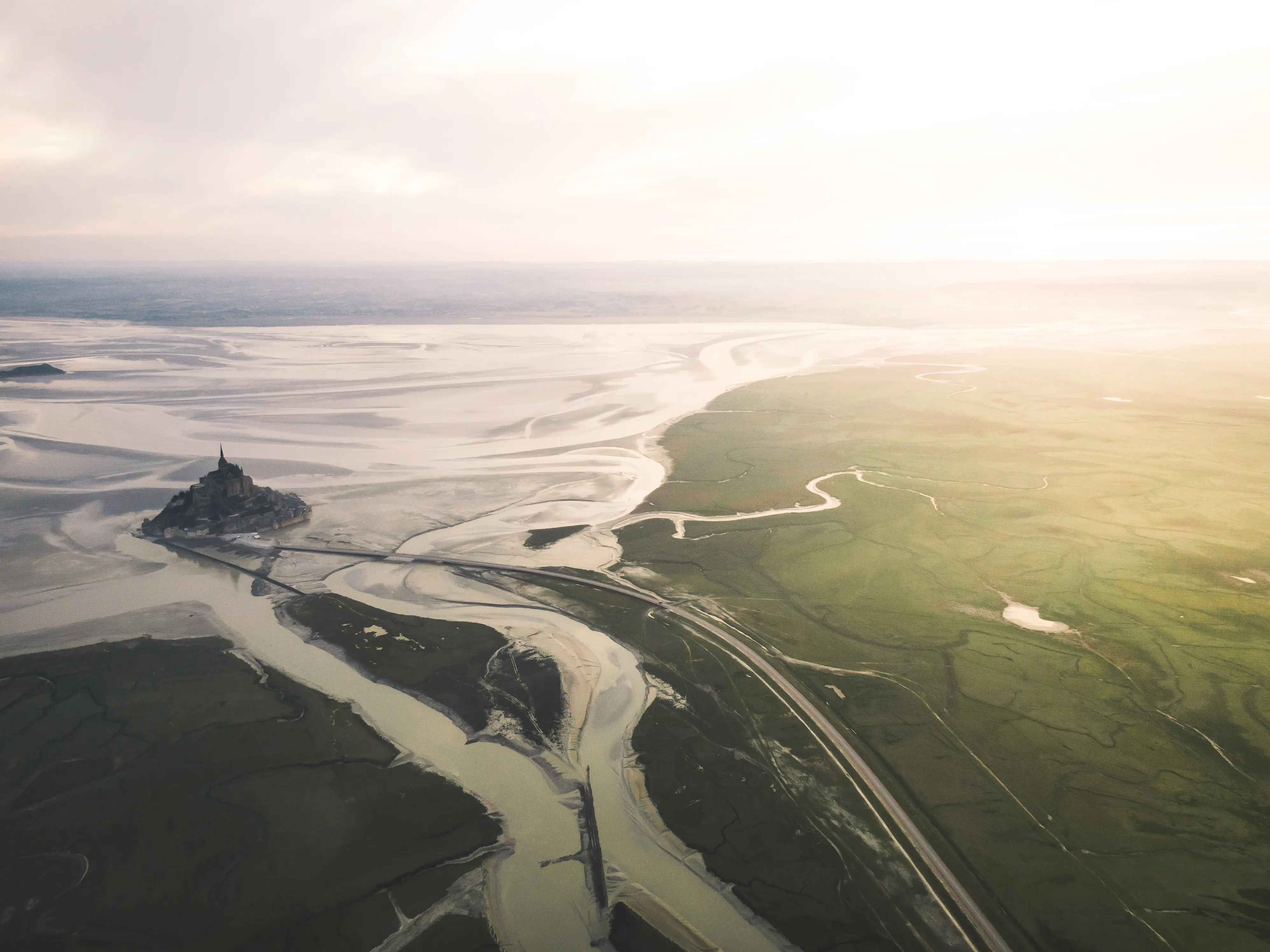
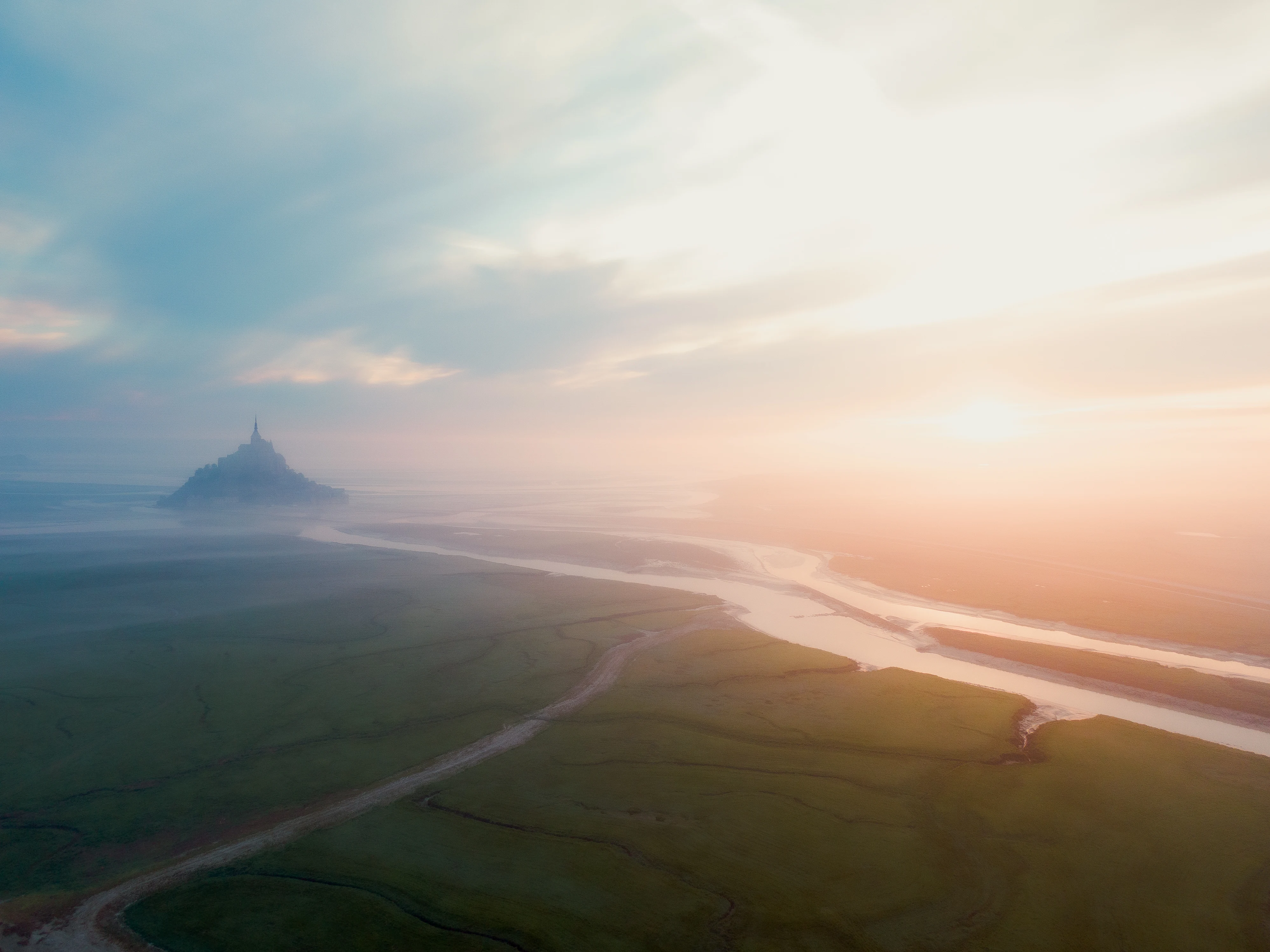
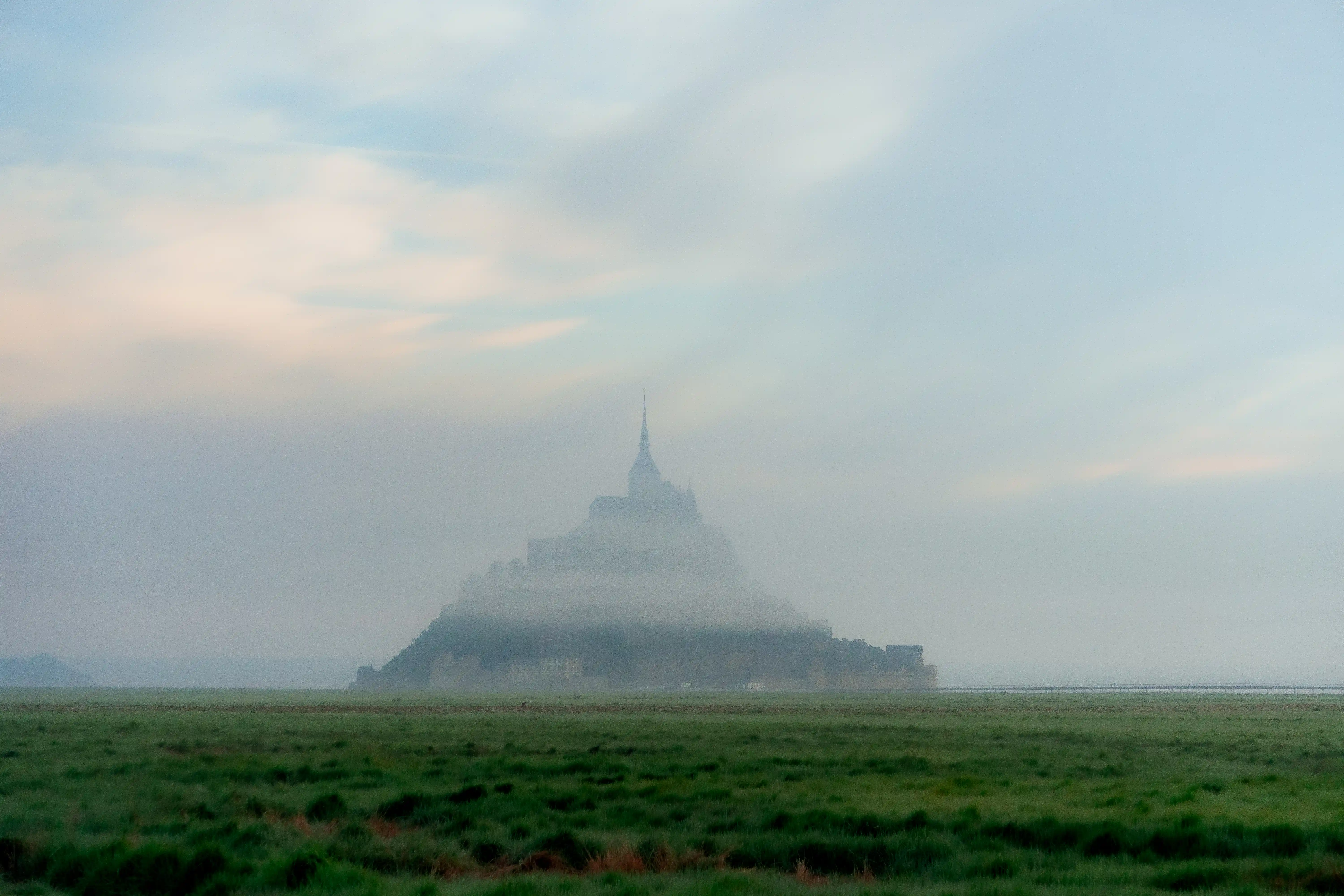
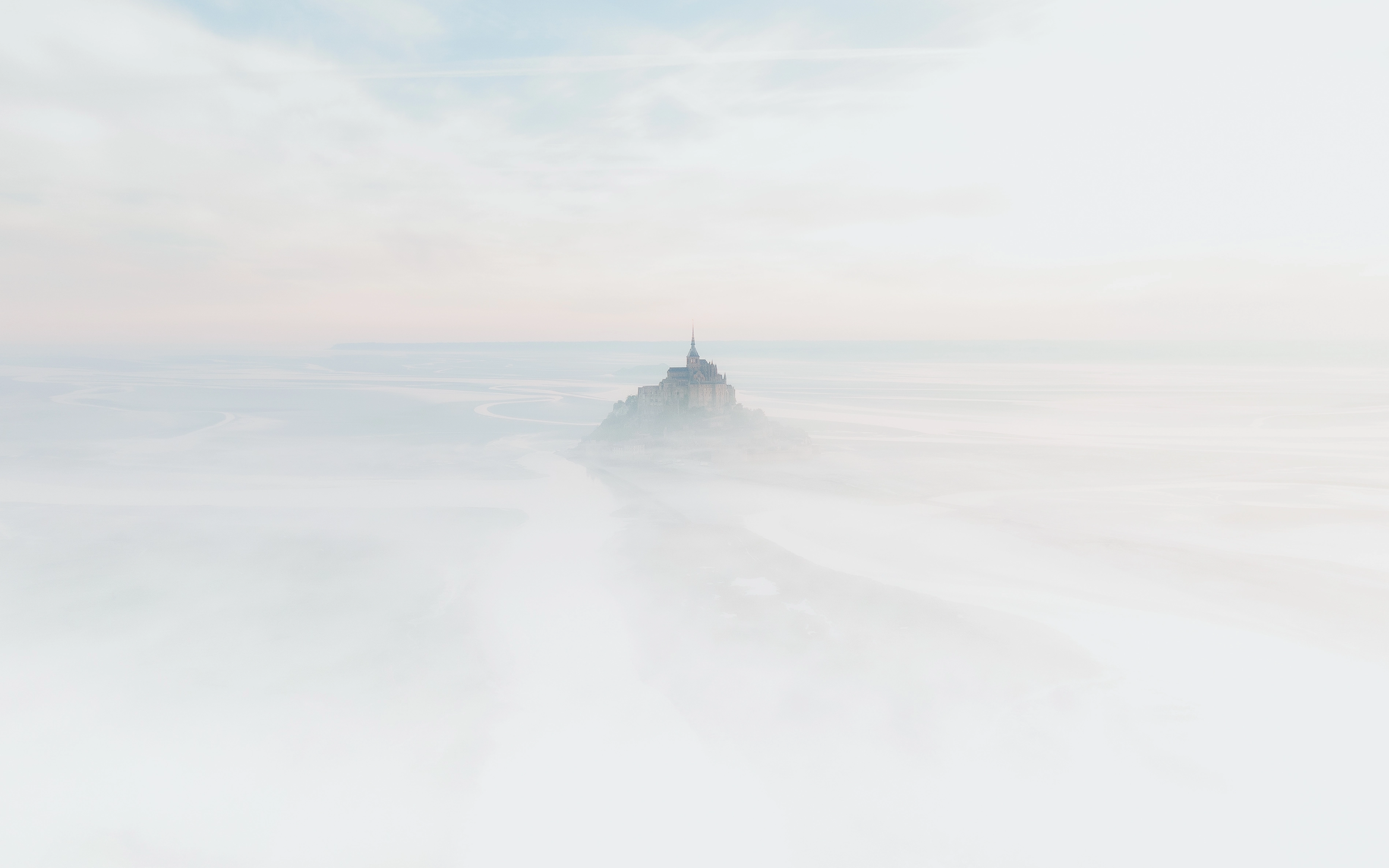
At low tide, Mont Saint-Michel sits on dry sand, connected to the Normandy mainland by a causeway. At high tide, it becomes an island. The transformation takes roughly six hours and has been happening since before recorded history.
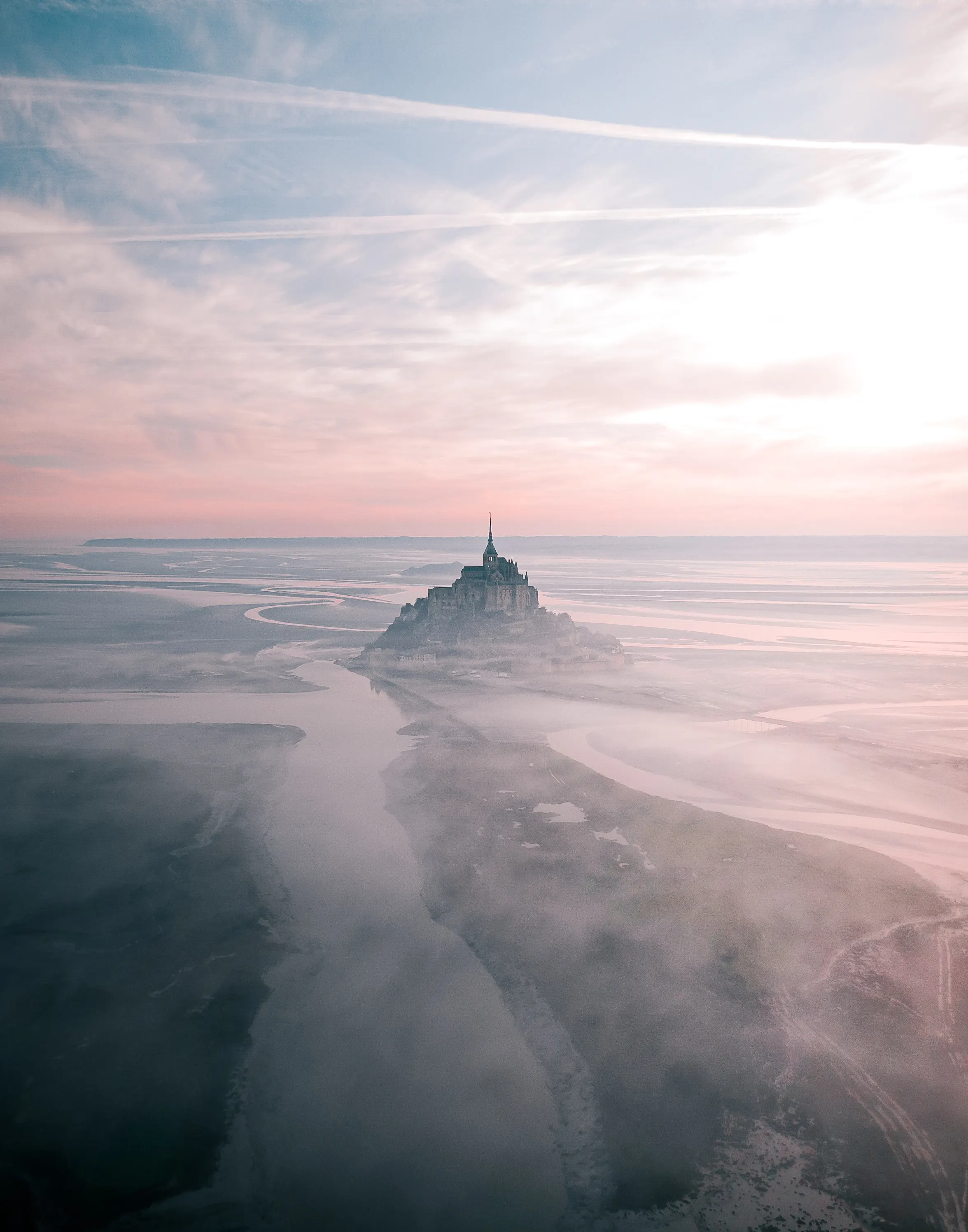
The tidal range here is among the highest in Europe — the difference between high and low tide can exceed 14 metres, with the water retreating up to 18 kilometres at its lowest. When the tide turns, it moves fast. Historical accounts describe the sea advancing "at the speed of a galloping horse." The tidal bore that rushes across the flat sand bay in the hours before high tide is both audible and visible from the island walls.
Geology of the Bay
The island itself is a granite outcrop — hard, resistant rock that remained while the softer surrounding terrain eroded away over millennia. The bay is composed of marine silt, fine sand, and clay deposited by the rivers Couesnon and Sée, creating tidal flats that extend for kilometres in every direction. A new tidal dam and sluice system completed in 2009 restored the Couesnon River's natural flushing action, reversing centuries of silt accumulation that was slowly connecting the island to the mainland.
History of the Abbey
According to legend, the archangel Michael appeared to Saint Aubert, bishop of Avranches, in 708 AD and commanded him to build a sanctuary on the rock. The Benedictine abbey that replaced the original oratory was founded in 966 AD and grew over the following centuries into one of the most architecturally ambitious religious complexes in medieval Europe. During the Hundred Years' War, the island's natural defences made it virtually impregnable. During the French Revolution, the abbey was converted into a prison, housing thousands of political prisoners until 1863. It was returned to religious use in 1966 — exactly 1,000 years after its founding.
Biodiversity of the Bay
The bay is designated a UNESCO World Heritage Site not only for its cultural significance but for its ecological importance. The tidal flats support one of the largest populations of migratory shorebirds in Western Europe — up to 100,000 birds during peak migration. The bay is also a breeding ground for European flounder, bass, and grey mullet, and supports a commercial shellfish industry producing mussels and oysters with a protected designation of origin.
The Photography
In my photographs, the tide has receded, leaving a web of streams spreading across the sand flats around the base of the island — a pattern that changes with every tide. I timed the visit to coincide with the retreating water, when the sand and tidal streams create geometric patterns that change by the minute. The light in Normandy in midsummer is soft and diffuse — overcast days produce even illumination without harsh shadows, which suits a subject as vertically complex as the abbey. These photographs were made across two visits, one at dawn in mist and one in clear late afternoon light.