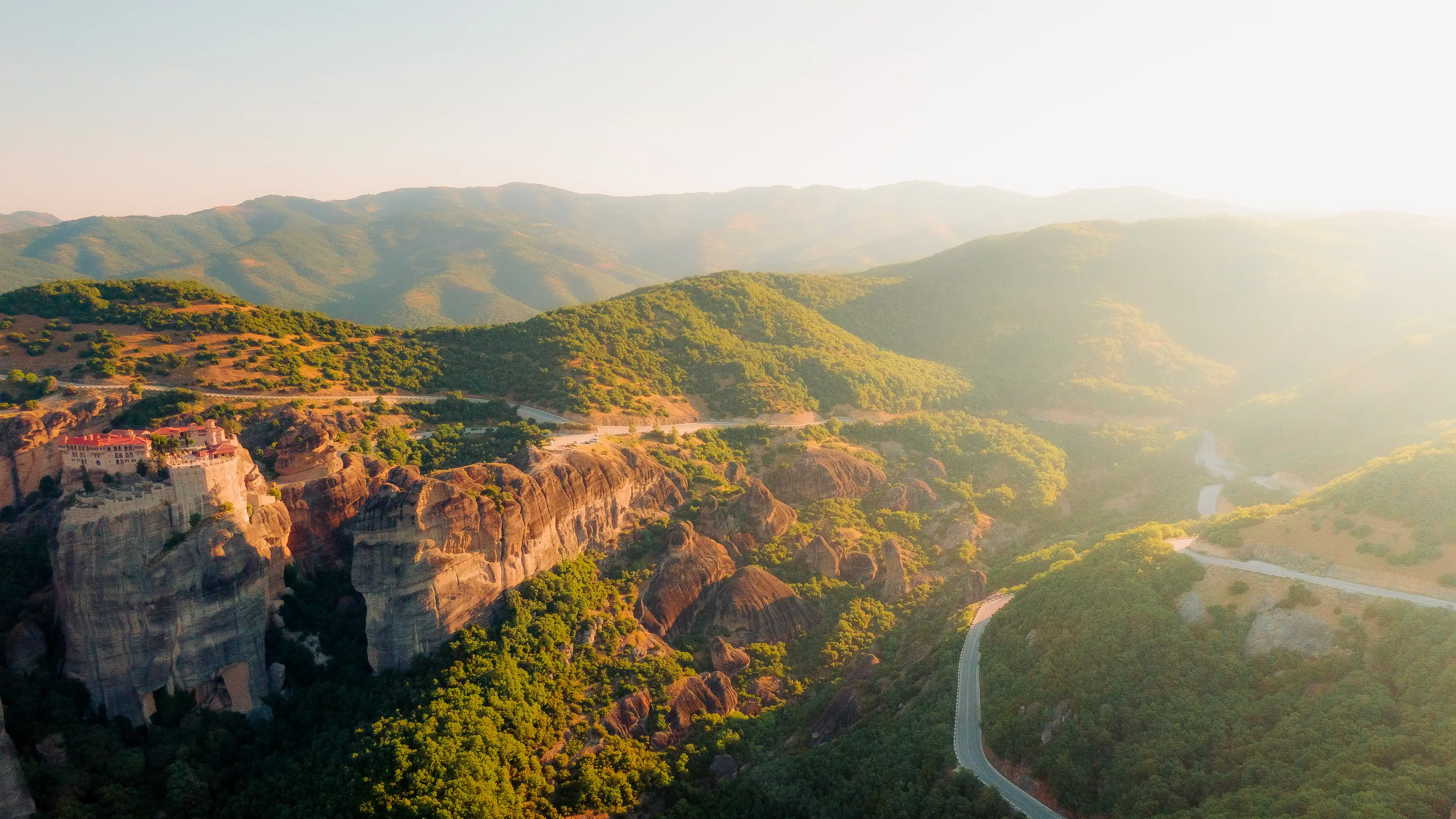
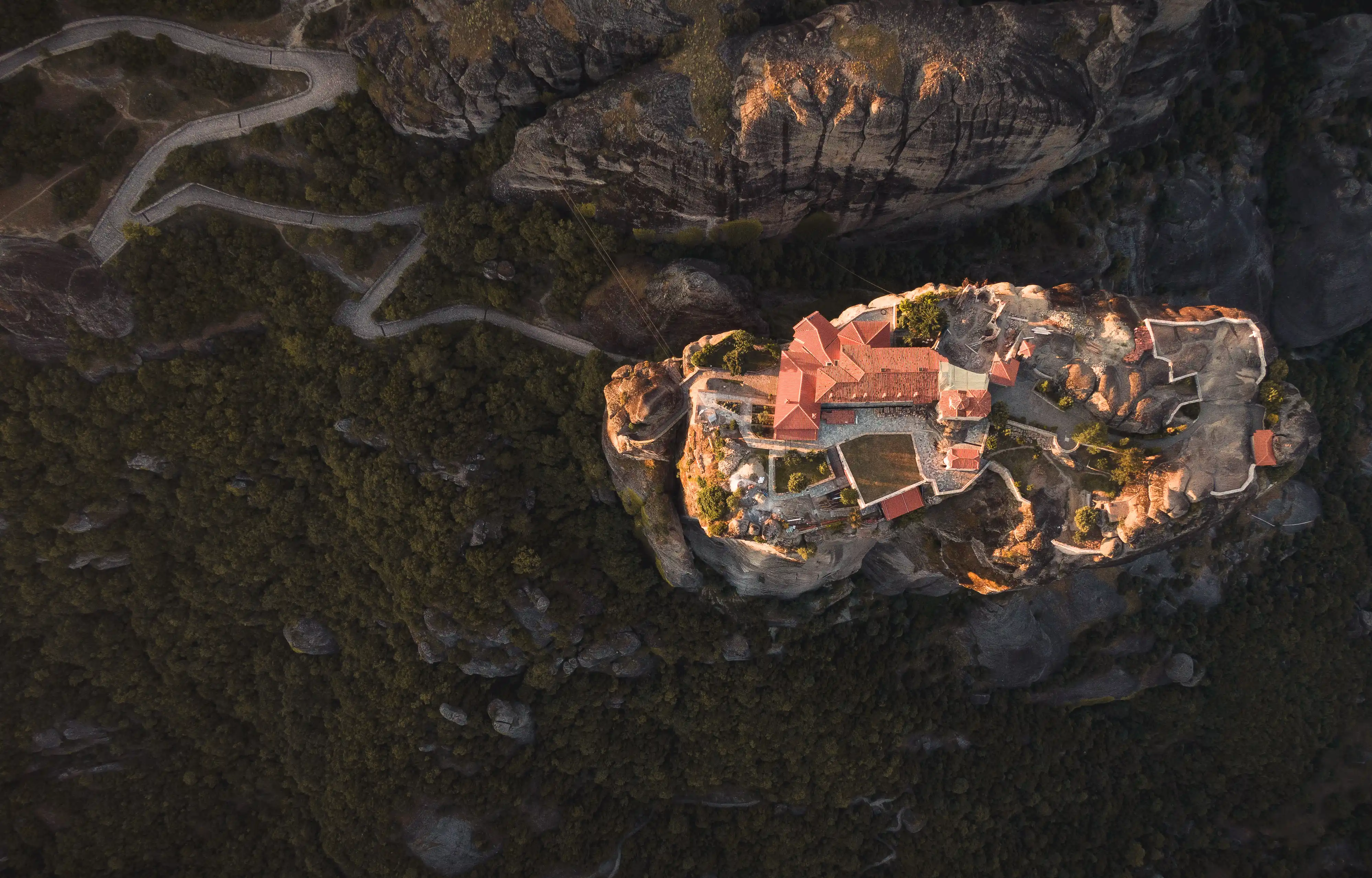
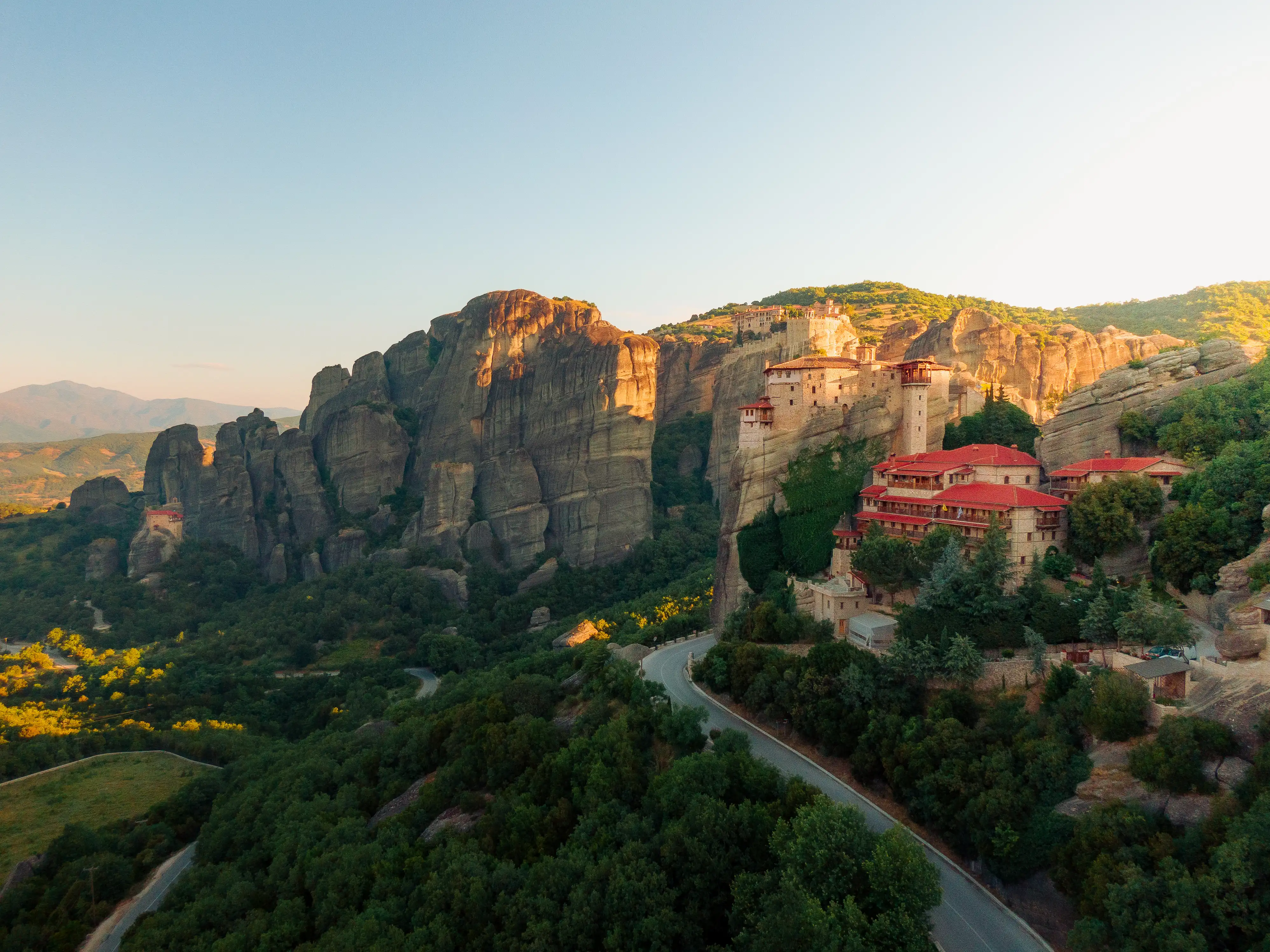
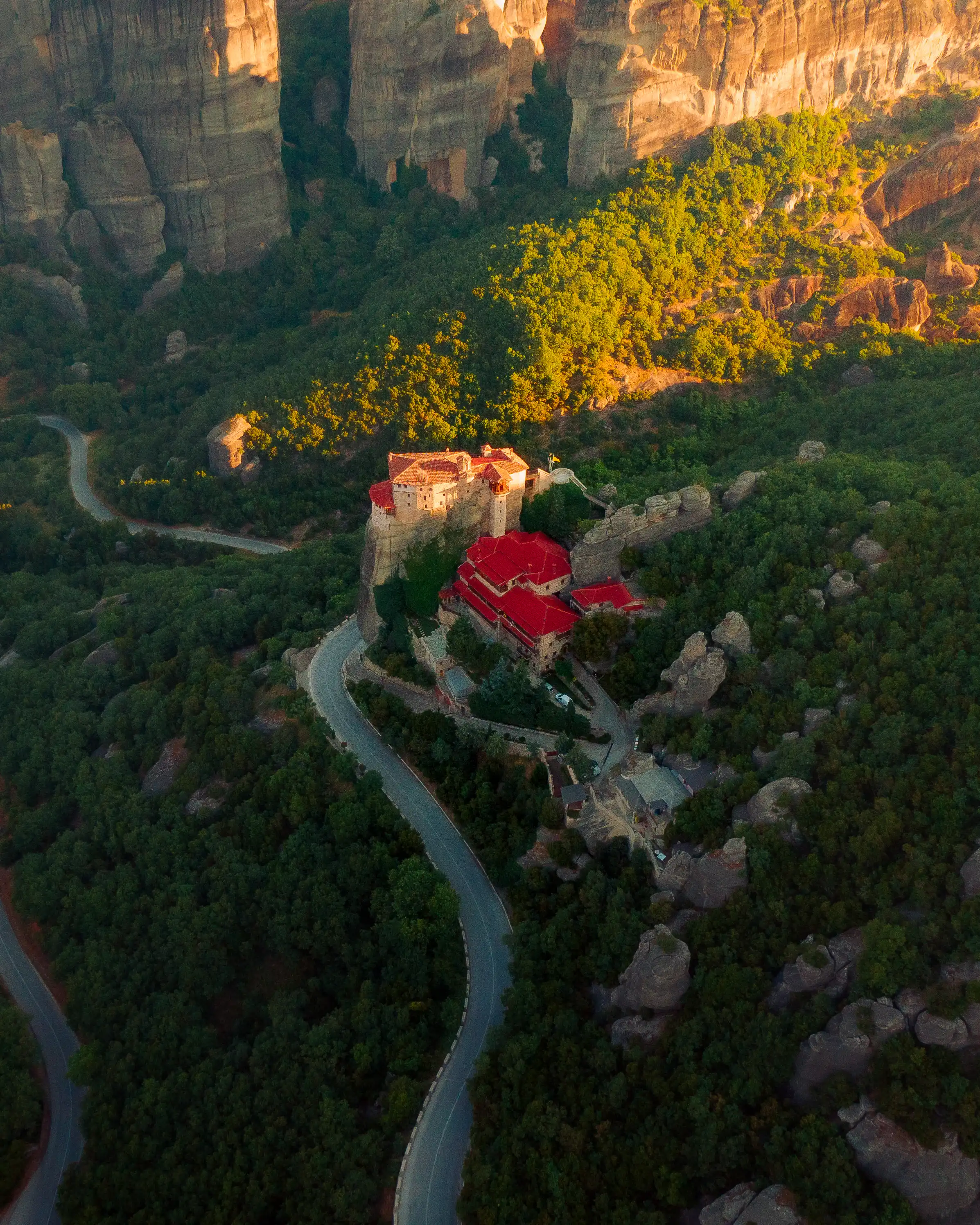
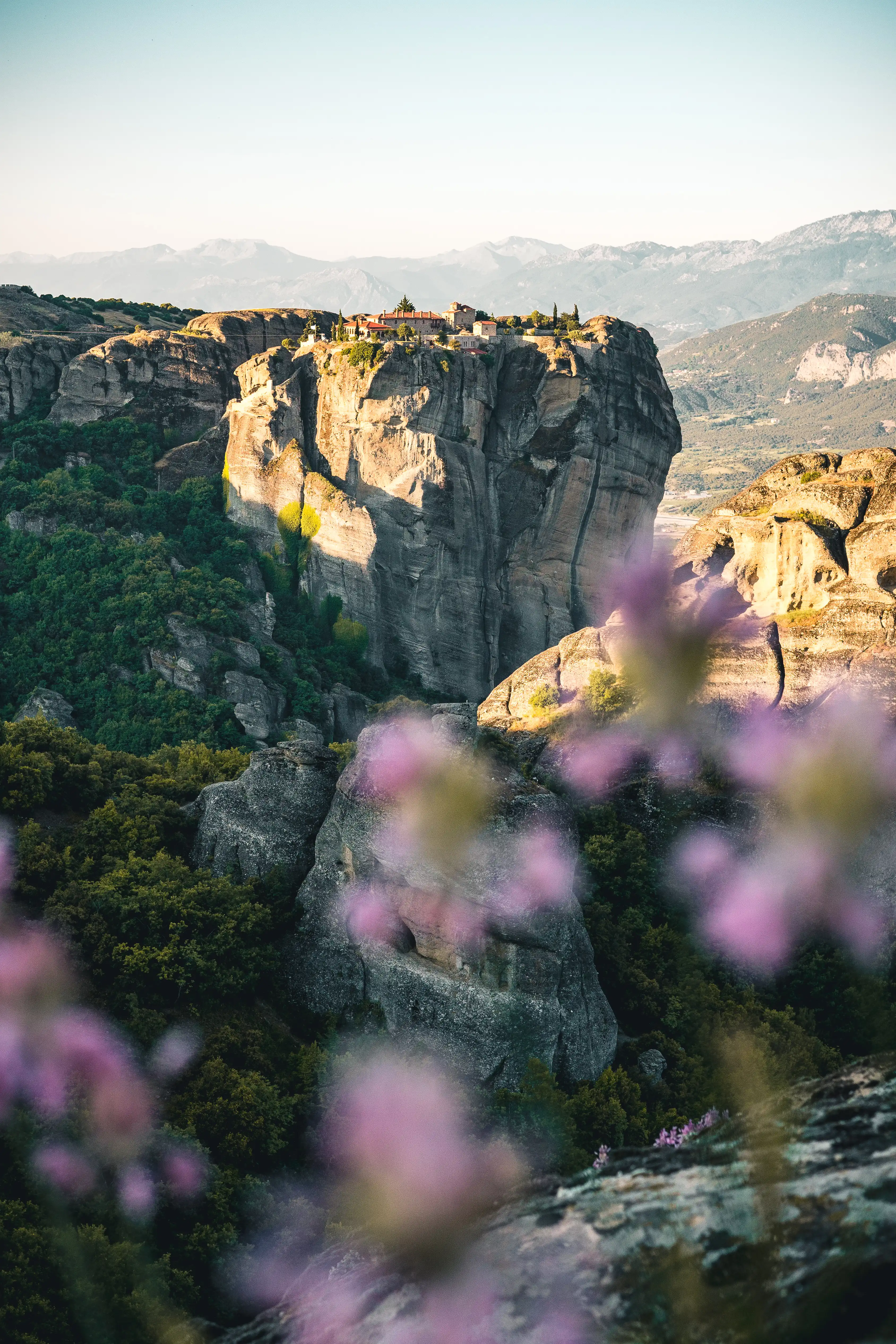
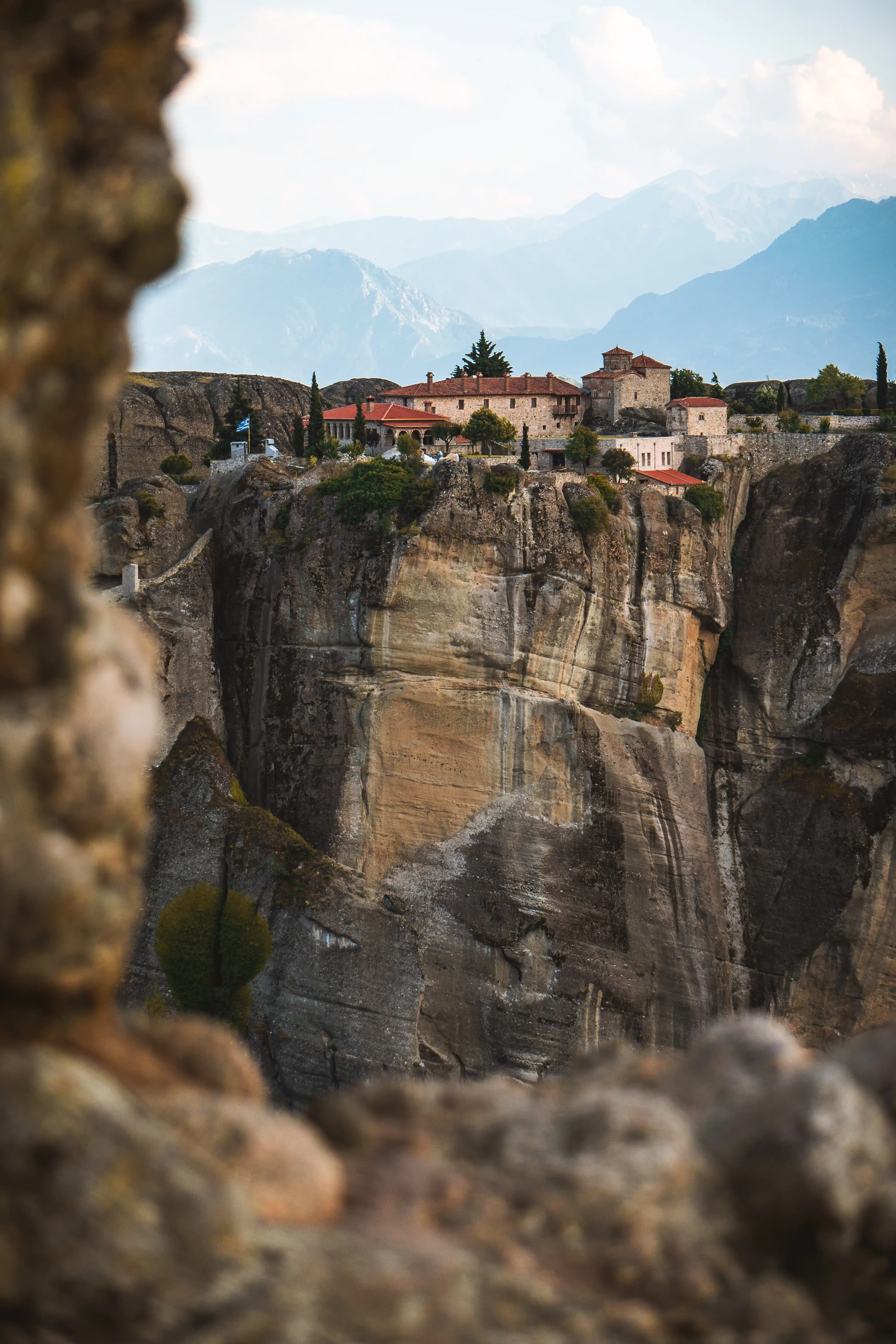
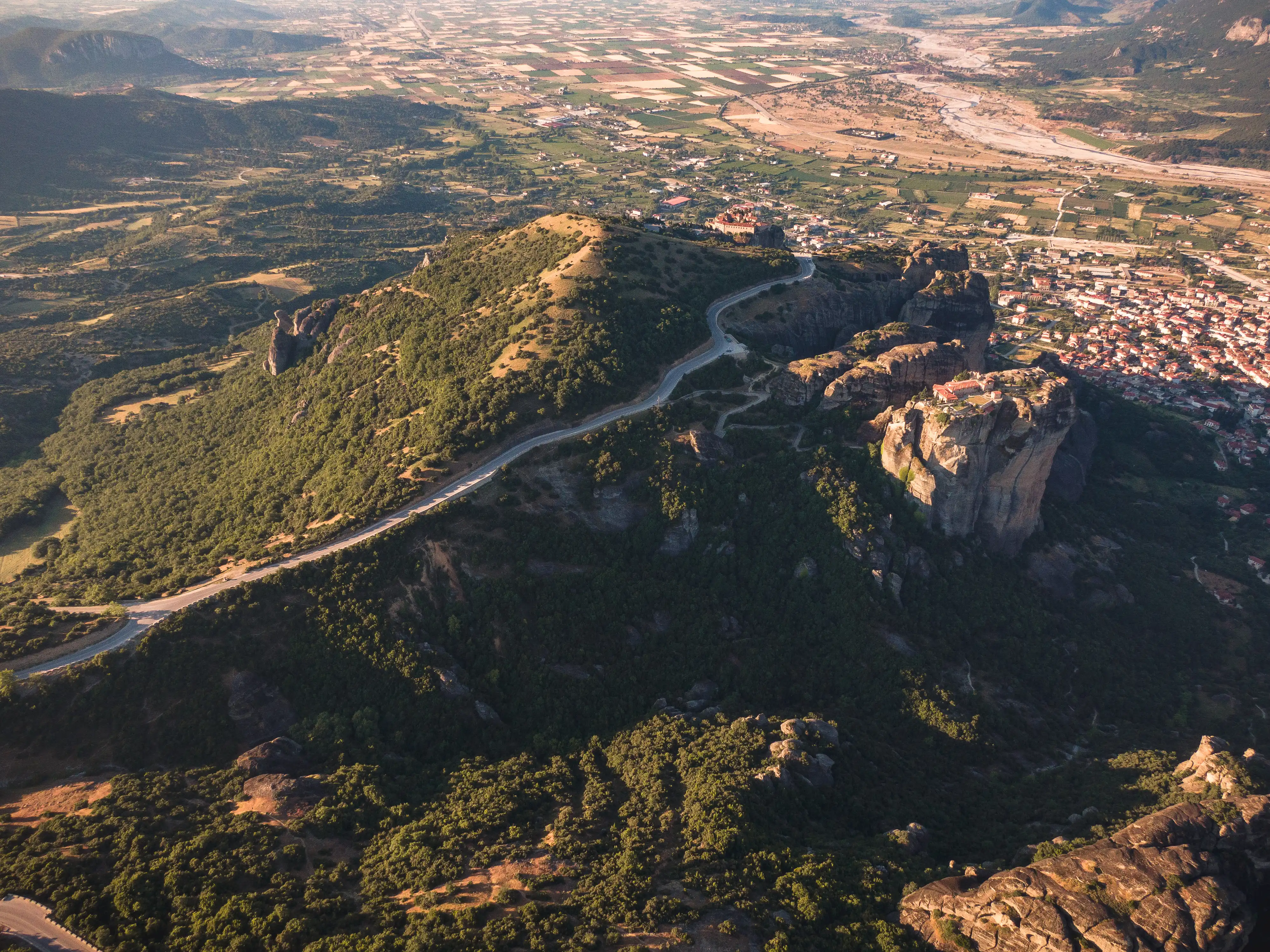
The name says everything. Meteora means "suspended in air" in Greek — and standing at the base of these formations, looking up at the monastery walls that seem to grow organically from the summit of each pillar, "suspended" is precisely what they appear to be.
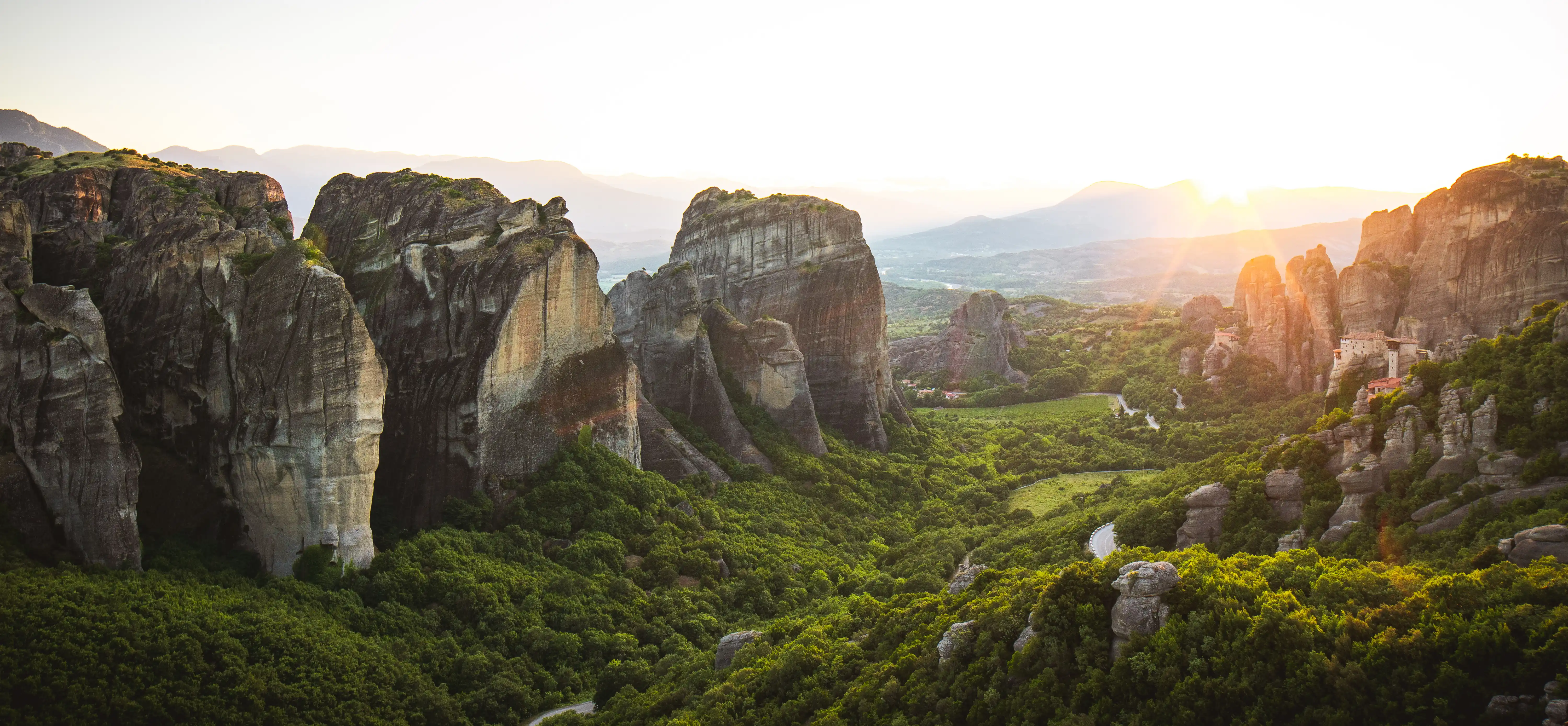
There are six active monasteries remaining at Meteora today, out of an original twenty-four. The others were abandoned over the centuries — some crumbled, some deliberately left to nature. The six that survive are still inhabited by monks and nuns, still practicing Orthodox Christian traditions maintained here since the 14th century, and still accepting visitors during limited hours. On the day I visited, a monk was hanging laundry on a narrow terrace 400 metres above the Thessalian plain.
The Geology
The rock formations of Meteora are the result of approximately 60 million years of geological process. The pillars are composed of conglomerate — a sedimentary rock formed from river-deposited sand, pebbles, and boulders — that accumulated during the Eocene epoch when this region was a vast river delta. The dramatic pillar shapes emerged through tectonic uplift and differential erosion: as the geological substrate was pushed upward, the harder conglomerate resisted erosion while the softer surrounding rock was worn away by millennia of rain, wind, and freeze-thaw cycles. The result is dozens of smooth-sided pillars rising between 200 and 600 metres from a flat plain, separated by deep vertical chasms.
Why Here
The 11th and 12th centuries brought hermit monks to the caves at the base of the formations — ascetics seeking isolation from the political turmoil of the Byzantine Empire's decline. By the 14th century, as the Ottoman advance threatened Orthodox Christian communities, the monks began building higher — on the summits of the pillars themselves, where no army could easily follow. Construction was extraordinary: building materials were hauled up the vertical faces by hand using windlasses and rope. Until the 1920s, when stone steps were cut into the rock faces, the only way to reach the monasteries was by rope or retractable ladder. Access was deliberately limited. That was the point.
Cinema and Culture
In 1981, the pre-titles sequence of the James Bond film For Your Eyes Only was filmed at the Monastery of St. Trinity — the one balanced on the most improbably narrow pillar. Early morning visits, before the tour buses arrive, remain the only way to experience the formations in genuine quiet.
The Photography
The light at Meteora is most dramatic around sunrise and sunset, when low-angle light casts long shadows between the pillars and illuminates the monastery walls in warm amber. Mist collected in the valley floor on the morning I visited, leaving the summit monasteries above the cloud layer — an atmospheric condition that made the name Meteora feel entirely accurate.